

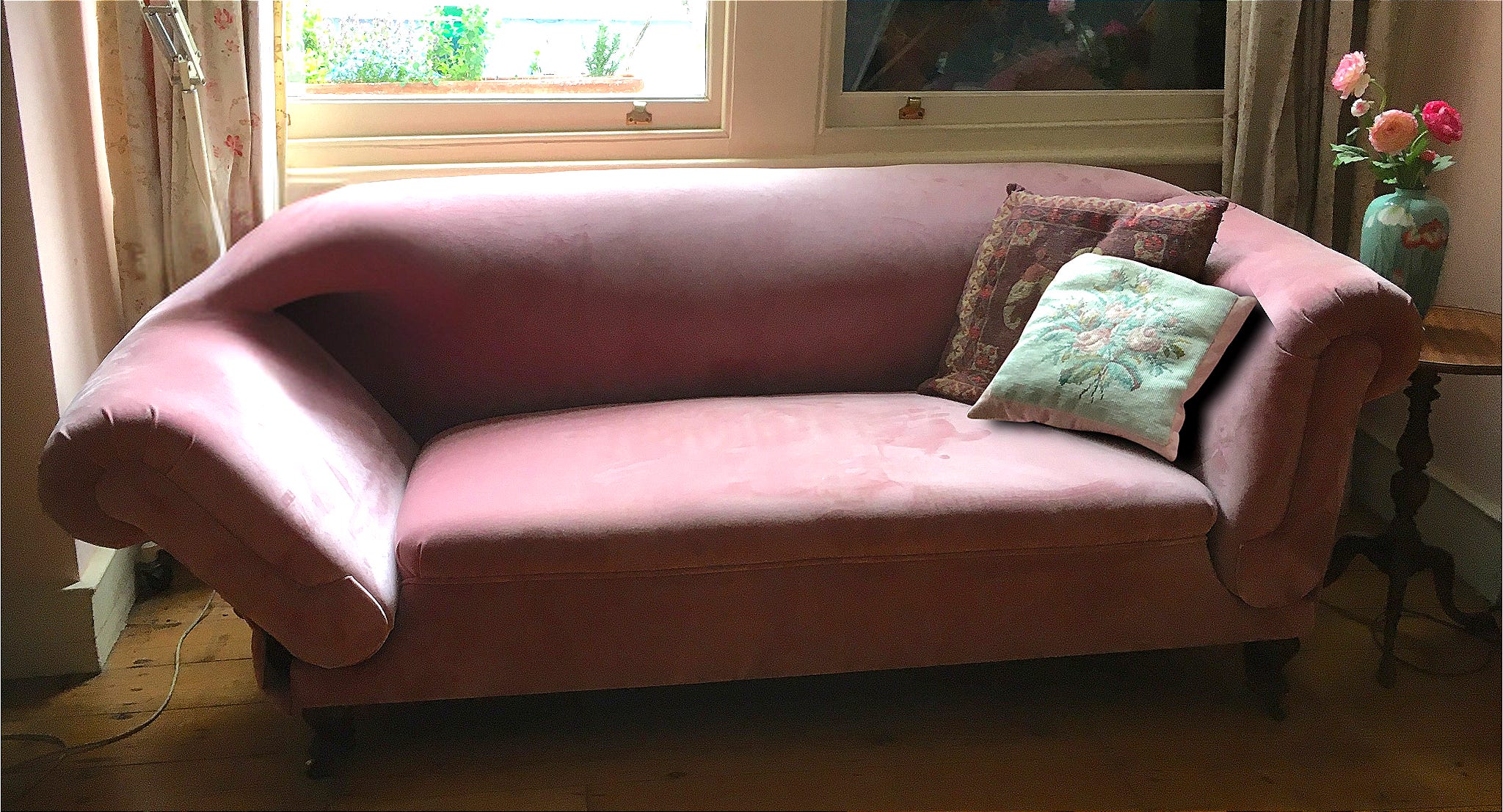
I vividly remember lying on this Victorian Chesterfield sofa as a child, particularly on sick days off school when it came into its own because both ends are adjustable, making it a perfect day bed for watching cartoons under the duvet.
Then, it was forest green corduroy, a fabric my mum had chosen when she’d had it reupholstered after buying it cheaply in a junk shop (she bought almost everything cheaply from junk shops, or scavenged things out of skips; good training!). A couple of years ago, when it was sagging and showing the signs of having lived with cats, my dad spent £1100, including the pink velvet, to have it reupholstered again. He’d dithered because of the not inconsiderable cost – but it’s solid and the drop arm mechanism still works beautifully and when it was returned he was delighted because it looks and feels like a brand new sofa. Not bad for something around 150 years old.
There are, of course, a lot of beautiful brand new sofas out there, some a lot more expensive than the cost of this refurbishment, some much less. I’ve just searched online to get a refresher on prices and found my heart beating a little faster as I enlarged a beautiful wooden-armed Habitat design, available on credit for £23.88 pcm; a nostalgia-pricking green corduroy four-seater for £269.99 from Wayfair; and a decadently soft, squashy rust-coloured one for a grand at Daals. The pull to want is strong. This is modern life. You can always find something that’s a more convenient shape than what you have, or a better colour, or covet something seen in someone else’s photo shoot-ready home. Part of my previous job was editing hundreds of pictures of stunning homes every day; I know that pull. As did Amandaland’s title character when she opted to chuck out her perfectly good sofa (pictured below) because she’d been gifted a brand new, designer model. We’ve all felt it.
So I hope this piece might entice you to stage a little anti-consumerism protest with me, to find new ways to love what you already watch TV on, or to think carefully about how and where you buy your next sofa as well as what will happen to the one it’s replacing. Which is where we’ll start…
Part 1: Moving it on
Let this option be your last resort: relieving yourself of a large, mixed material piece of furniture isn’t easy. Often sofas, even in perfect condition, can’t be resold due to British fire regulations, more on which below, and they are complicated to recycle and so typically they are not recycled.
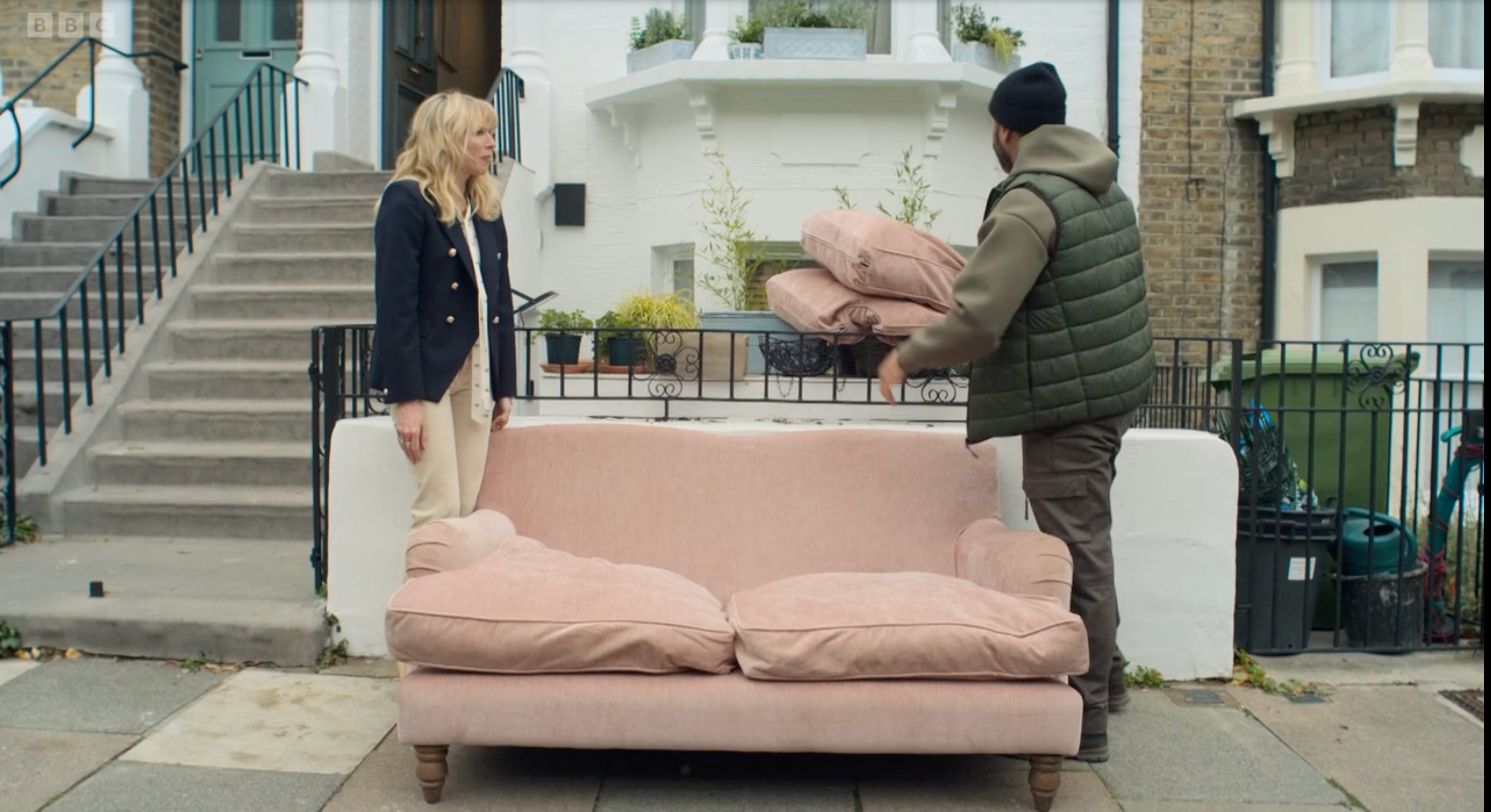
I once sat on my bike, stuck behind a rubbish truck, and watched, horrified, as a perfectly decent but out-of-favour giant corner sofa that had been dumped outside a house - Amandaland style - got fed into its metal jaws then chewed up section by section. As Amanda also discovered, leaving a sofa outside your home, however well-looked-after it might be, doesn’t mean it’ll be taken in by a grateful passer-by. But is taking it to the tip a good option?
To learn more about what does happen to tipped upholstered furniture,The Survivor Sofa Story is an excellent quick education. I first heard about the 2015 short film about a two-year-old dumped Laura Ashley sofa, in Chloe Bullock’s excellent book, Sustainable Interior Design (RIBA) and was reminded of it when I chatted to another environment-focused designer, Ella Doran, who features in the film. The sofa’s crime? No fire label.
Survivor Sofa sees a team of four designers taking up residency at a waste processing facility to learn about the design details that make furniture hard or impossible to recycle or reuse, as well as seeing up close the epic amount of often reusable stuff people regularly discard. As Bullock notes in her book, the fire label is currently an upholstered piece of furniture’s “passport” to a future life. Without one, unless a piece is rehomed privately, it’s destined for landfill or incineration. And she highlights a common issue with these labels: “Fire-safety labels are often in a prominent place that irritates users and flap about so people tear them off without knowing the future consequences of removal.” This isn’t the only reason there is a campaign against these regulations; you can read about it here.
The designers in the film set out to rebuild the dumped sofa sustainably and recycle-ably, using what they’ve learned (like, there’s an alternative to a thousand staples). Survivor Sofa is only 25 minutes long and absolutely fascinating, you can watch it in full below.
The Survivor Sofa, Paul Wyatt Films.
Had my dad decided to replace rather than reupholster, what would have been my childhood sofa’s fate?
He could have taken it to the tip, where it would have been incinerated
In the UK, because it’s too old to have a fire safety label*, no charity shop can legally sell it
Had it been a newer sofa with a fire label (not always easy to locate, as described above) some recycling centres have repair and sell operations. In the UK, these include the Manchester Renew Hub and Rework in Wandsworth, London
He could have paid Divert to remove it; the organisation promises to break up and recycle all the materials in a sofa for its fee
Someone on Marketplace or Gumtree et al may have bought or taken it – as an individual, you’re legally OK to sell or pass on fire label-free furniture to another individual
He might have sold it on Vinterior; as this operates as a marketplace, unless you’re a professional dealer, you can sell sofas without fire labels. Freshly reupholstered, it could have fetched almost £3,000, like this one
A newer sofa could potentially have been resold on ReHome or Sofalistic
Part 2: Reuse, repair, reinvent - and the power of a professional clean
The reinvention: Polly Granville Upholstery and Sustainable Furniture took on this sofa, below, for designer, Uns Hobbs, which did not work in the apartment she was working on. It was “too modern and too clean-lined for the new direction,” Granville relays. “It needed warmth, softness and a proper English cottage feel.” Many would get rid and find a new sofa. Instead, Hobbs asked whether Polly Granville could reinvent it. Brace yourselves.
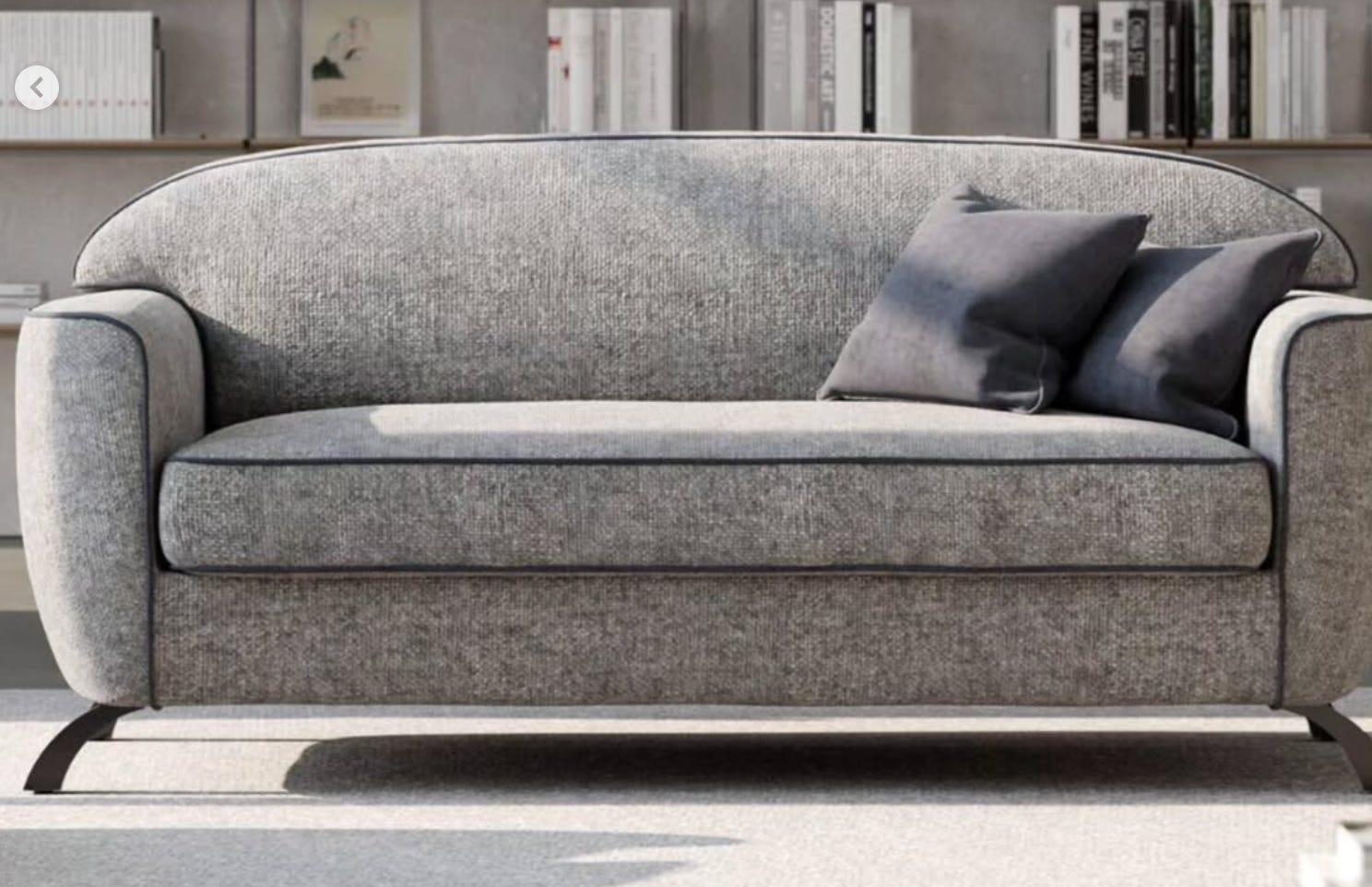
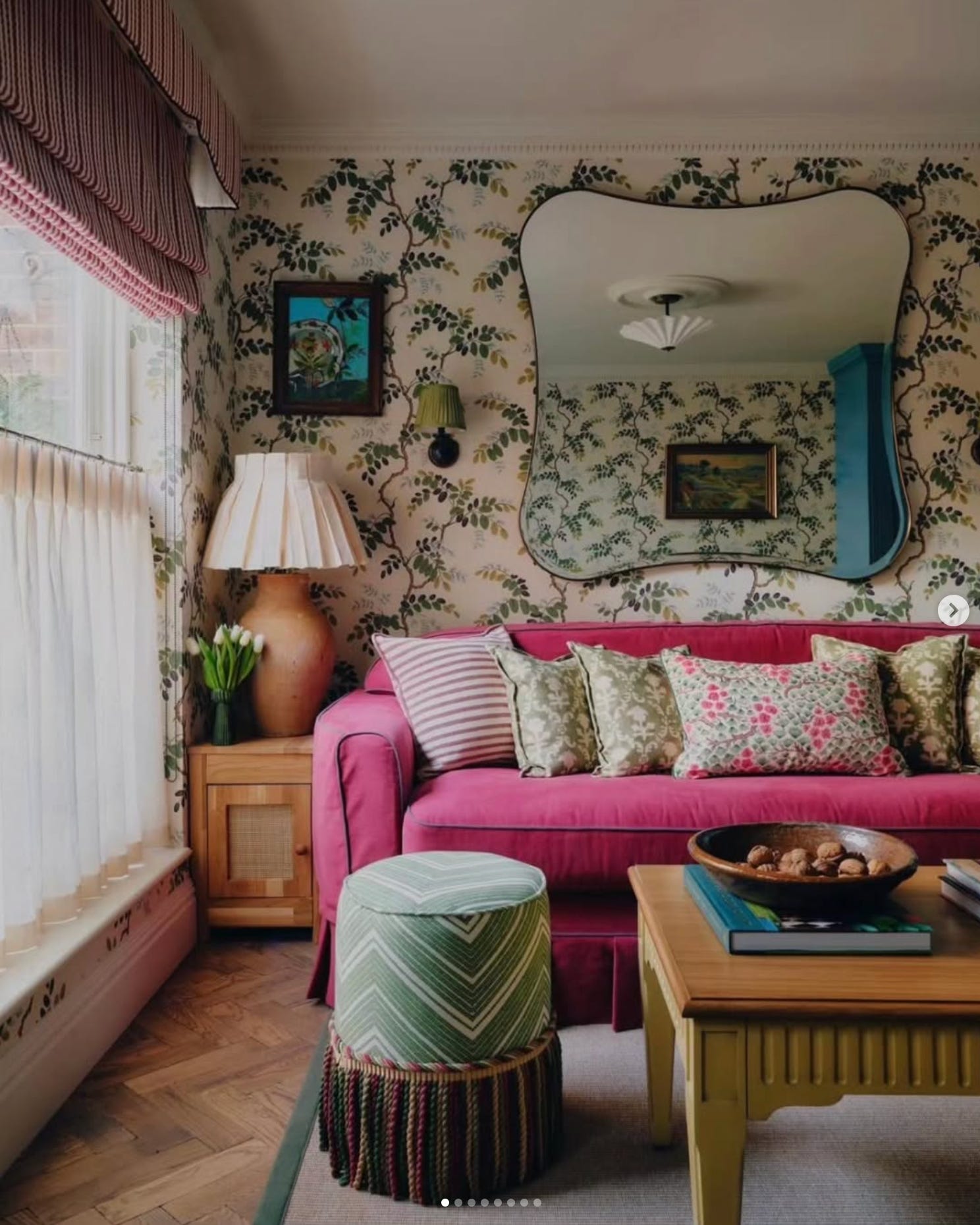
Now scroll down: can you believe this is the same piece of furniture? Granville designed a bespoke cover from scratch, adding a box skirt – all in washable pink linen with a contrast piping – and newly shaped arm caps. “It completely transformed the style, feel and colour of the existing sofa,” the upholsterer says.
The street sofa: Have you heard of We Are Repairs? It’s a fantastic directory (online and app) of repairers around the country. Its founders, furniture restorer, Ally Booker and upholsterer, Gem Broad, are the go-to duo for sourcing expertise and they put me onto Harriet Page of Hare in the Chair. Visible mending is one of Page’s specialities and I wanted to ask her thoughts on this sofa I wrote about on Instagram a few weeks ago, which had been dumped on the street.
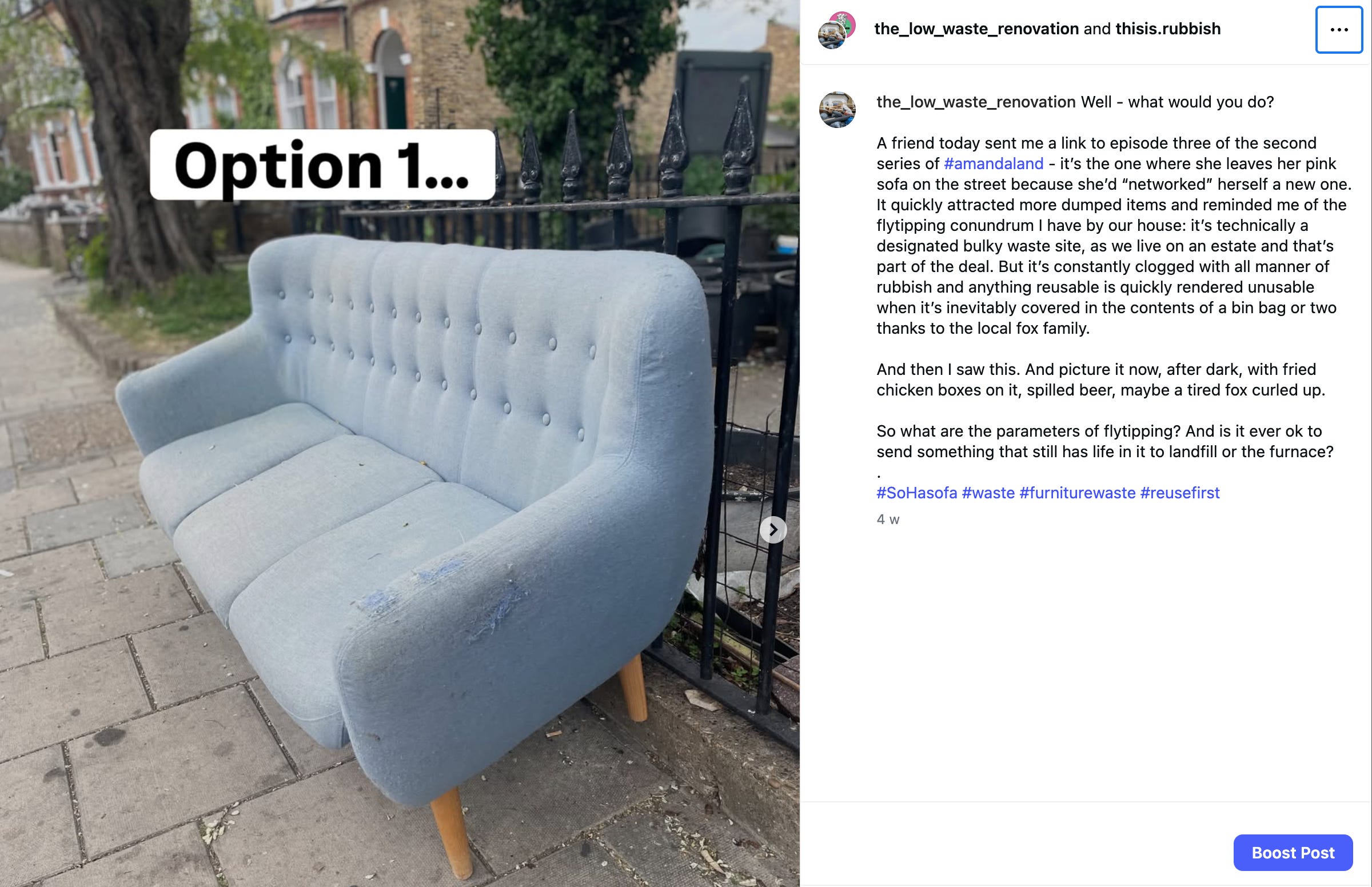
It was grubby and had several (badly) patched up rips, but it was solid – and very pretty. Surely this shouldn’t be burned, I wrote, and invited readers to suggest what they’d do with it. There was a lot of love for visible mending.
“It really saddens me how many sofas end up in landfill or fly-tipped on the street, especially as there is often still much life left in them,” Page says.
“Due to the current fire safety regulations these sofas are also full of toxic chemicals which means that when they do end up in the tip they have to be burnt at very high temperatures – at great cost to local councils – and the environment.
“What could you do with the sofa? You could update it with a fresh new cover or perhaps add a loose cover - which also has the advantage of being washable.
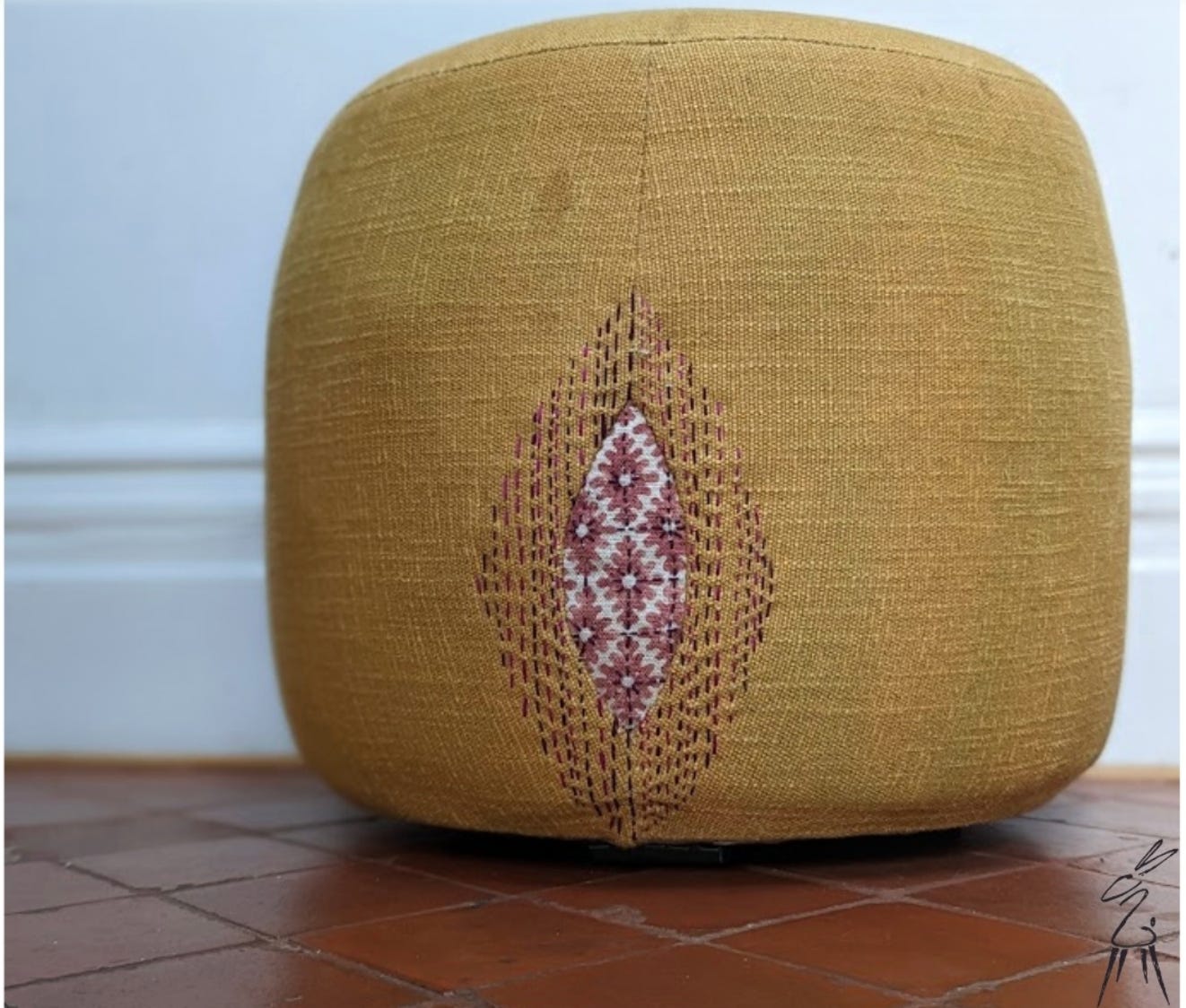
“Perhaps if that feels too expensive – maybe think about visible mending – this is a great way to acknowledge the wear and add a beautiful additional detail to your well-loved piece.” Below is a footstool Page recently repaired using visible mending.
The Hare in the Chair website also has a really informative guide to the differences between reupholstering, refurbishing and recovering.
The tired High Street sofa: This sofa belongs to a friend and the situation feels like a common one. She inherited it from her brother several years ago and he’d already had it for two decades, after buying it new from Marks and Spencer. He’d been about to take it to the tip when she rerouted it.
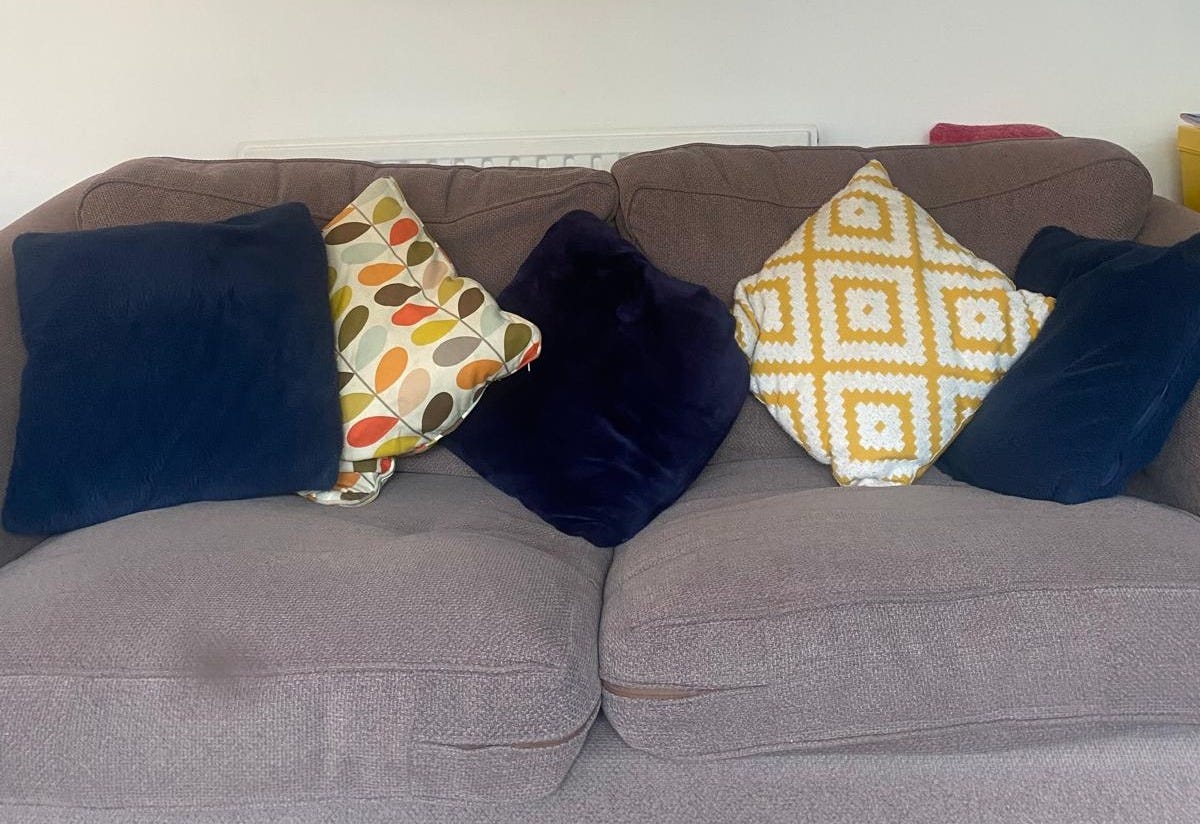
It’s had a good life, but now it’s tired and uncomfortable, not to mention full of the visible signs of having been extensively enjoyed by her two young children. Oh, and one of the screw-in legs no longer screws in so the sofa is propped up. Should she chuck it out? If not… what are the options?
I asked Polly Granville: “The leg that no longer screws into its hole will be a little tricky if it’s all made of chipboard and glued together. I know a lot of high street sofas have been impossible to get into people’s homes because you can’t take them apart - but if that’s not the case, a carpenter could fix the frame.
“If it’s saggy, that means new cushions.” She suggests asking the retailer if they sell the cushion covers as a not-too-expensive option – “Ikea often do for their sofas” she says – then spending a bit of money on foam-feather wraps to resolve the sag.
She also mentions upholstery cleaning. I recently had our tired old sofa and an armchair professionally cleaned and the result is incredible – they feel new again. I’ve got a before and after photo of the chair which I’ll share those on Notes and on Instagram shortly. The chair cost £32 to clean and our L-shaped three-seater cost £70.
Part three: Buy it better
For UK readers, here are some starting points for reducing waste if you do decide to replace a sofa, or fill a new space with a new one, from ex-display to returns to secondhand.
Vinterior - Right now, there’s a luscious brown corduroy 70s boxy sofabed for £895, acres of Ercol and a spectacular midcentury Terence Conran Blonde Maple Scandi Lounge Suite for £2,750.
Antiques fairs - Check out the ICAF website for listings of their seven nationwide fairs and get a flavour of the Sunbury Antiques cluster (there are five rotating events) fairs on my Instagram. I’ll share a little video in Notes shortly, too.
ReHome - I’m very taken with the Bo Concept Modena rust-coloured corner sofa for £799 and the oxide red wool Heals corner sofa for £999 (more than £5,000 new)
Sofalistic - Currently in stock, a lovely Peter Guild striped three-seater for £1250 (it’d be £3,200 new), a Darlings of Chelsea Studio charcoal velvet lounger for £600 and a pristine Furniture & Choice button back two-seater in blue, for £300.
Charity shops - Do enjoy British Heart Foundation, too, before it closes all its shops and if you’re near an Emmaus you could also ask them about the repair workshops they have in some locations.
There are so many more to mention - and please do share somewhere you rate in the comments.
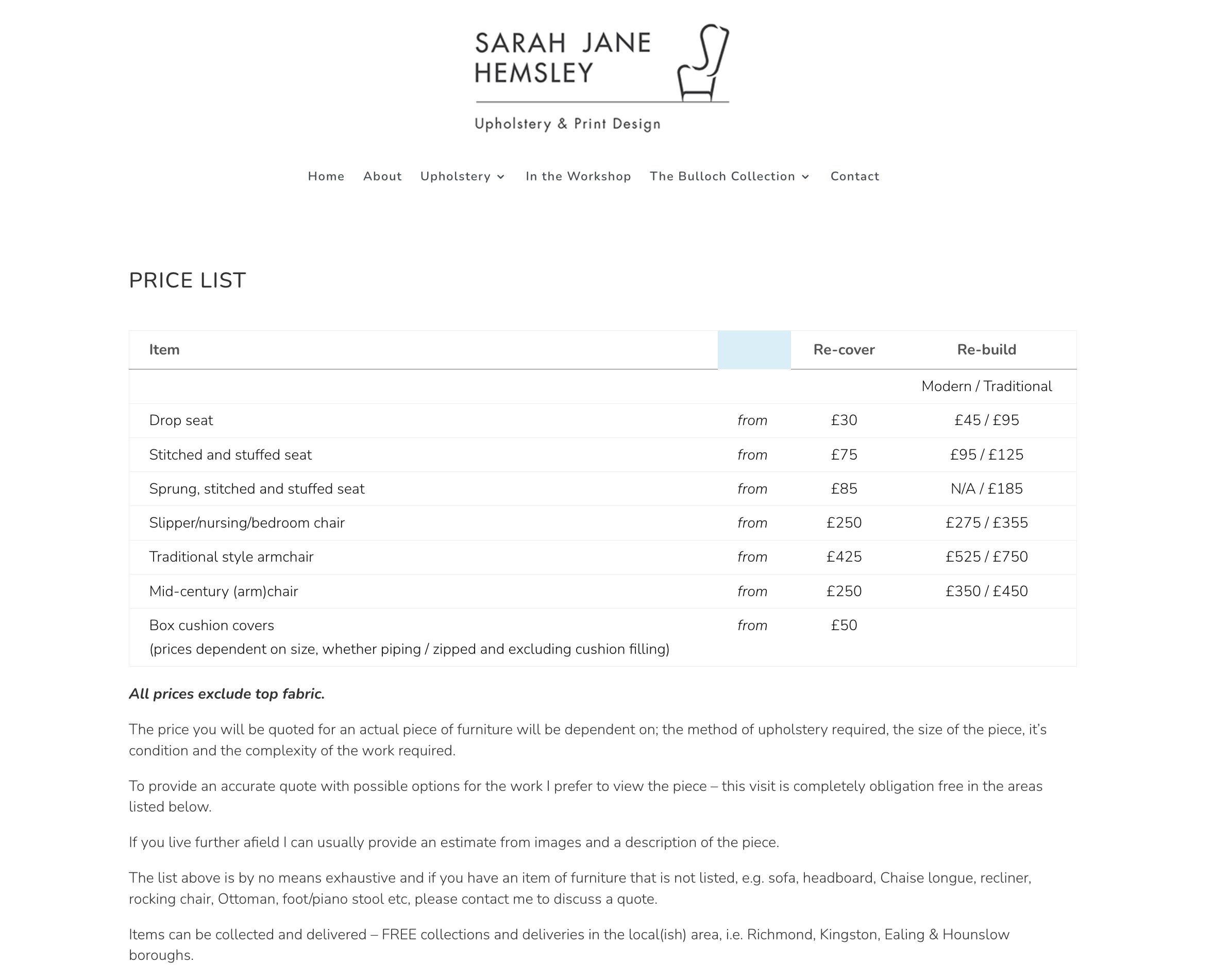
To learn more about upholstery services and get a loose idea of costs, I found this guide pretty useful.
And here are a couple of price lists from Sarah Jane Hemsley, in Bute and Needlerock in Ceredigion, Wales.
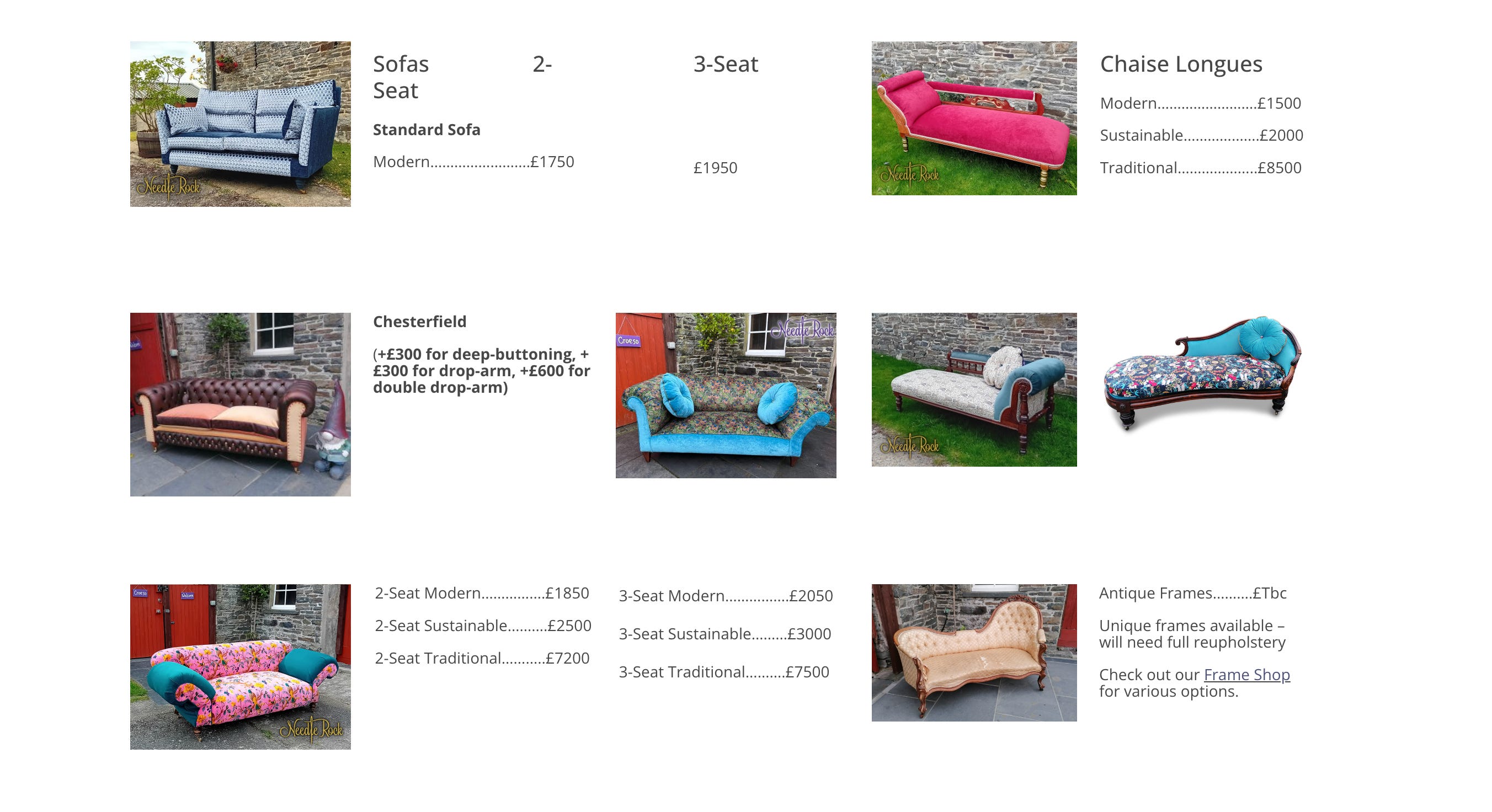
Do you have sofa questions? Let me know below and I’ll aim to get them answered!
You might also enjoy…


This is excellent and very useful.
Are British Heart Foundation planning on closing all their shops? Please tell me they're not actually going to do that.....
Kate this is brilliant! So much information I need to re-read and refer back to.