

Like this post? Click the ❤️ above and leave a comment: this helps Substack’s algorithm show it to more people.
Q: When is a flytip not a flytip?
A: When it’s a council estate bulky waste site.
If you’ve been reading This is Rubbish from the start, you’ll know I bang on about this a lot. Because I live on a council estate, opposite a bulky waste site. It is revolting and depressing and makes one despair for humanity. And it looks, to anyone unfamiliar with this quirk of council estates, identical to a flytip.
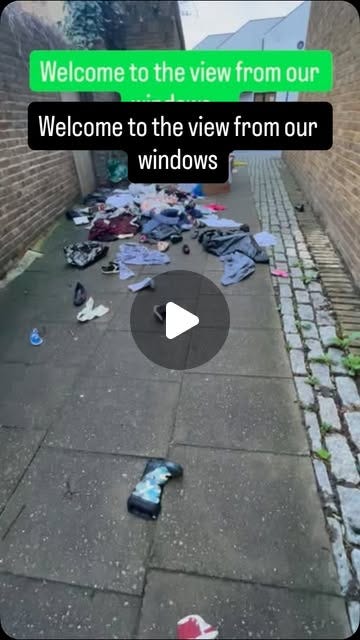
Rather than booking a bulky waste collection with the council, if you’re on an estate, you get a designated area to leave all the stuff that’s too big for your bin and a council caged truck turns up like clockwork and magics it away.
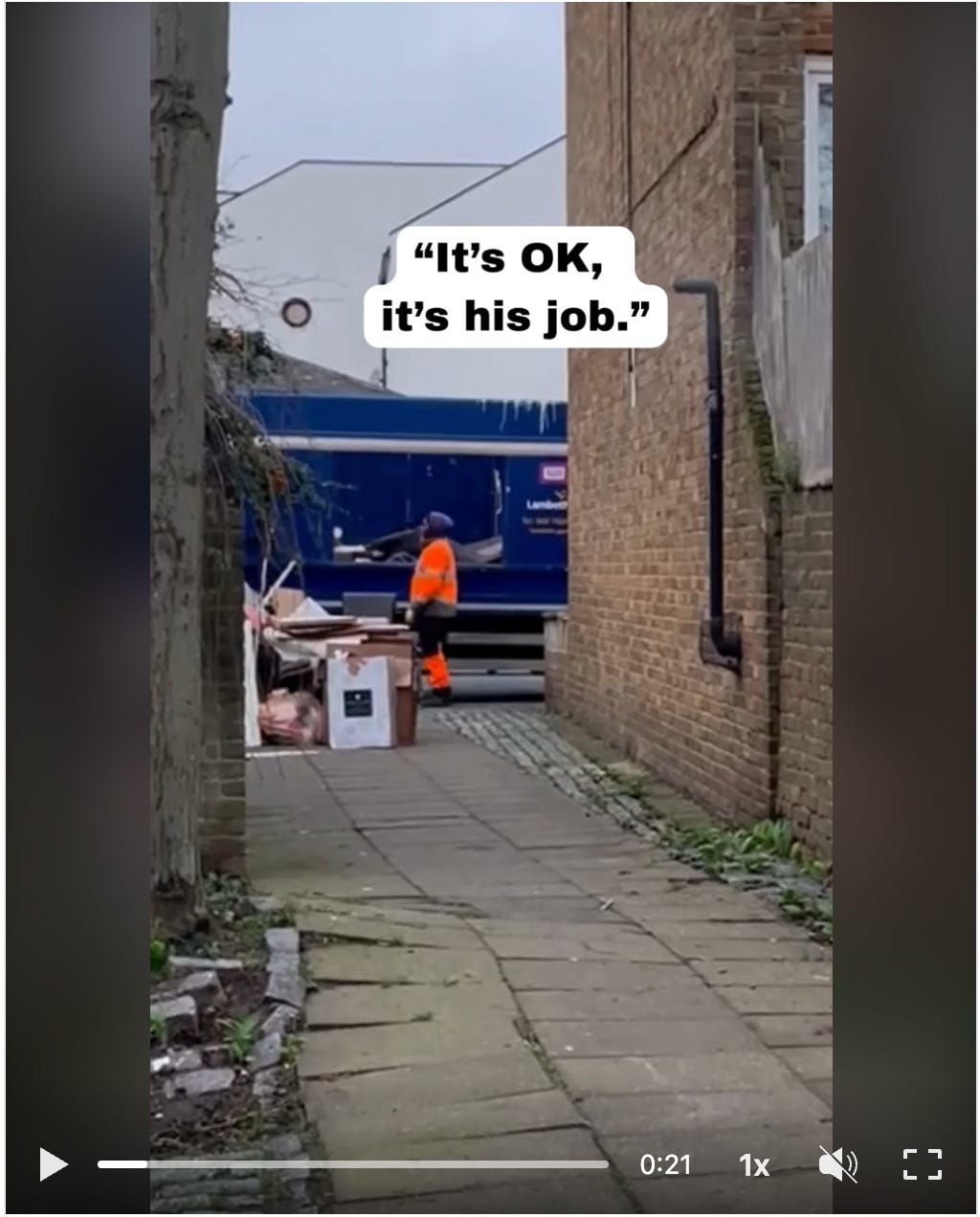
You might already have clocked some glaring errors in this plan. For example:
Rubbish attracts rubbish - as photographically illustrated in this piece, where you can enjoy seven years’ worth of photos of ‘our flytip’, aka the bulky waste site, captured across the seasons with its ever-changing stream of reusable cast-offs doused in the contents of split bin bags full of anything from unwanted footwear to half-eaten food and garden waste.
At least half of what winds up there could be reused. Yet it’s all bundled into the same pile in the van and carted off to be incinerated or shipped abroad to landfill/make another country’s beaches unbearable.
So I’ve been excited by two conversations I’ve had this week about this problem. One, with the deputy leader of my local council whose specialist areas include sustainability and waste, but I’m not yet allowed to talk about that yet. The other was with one of the founders of a growing grassroots north London charity and collective called KindCycle.
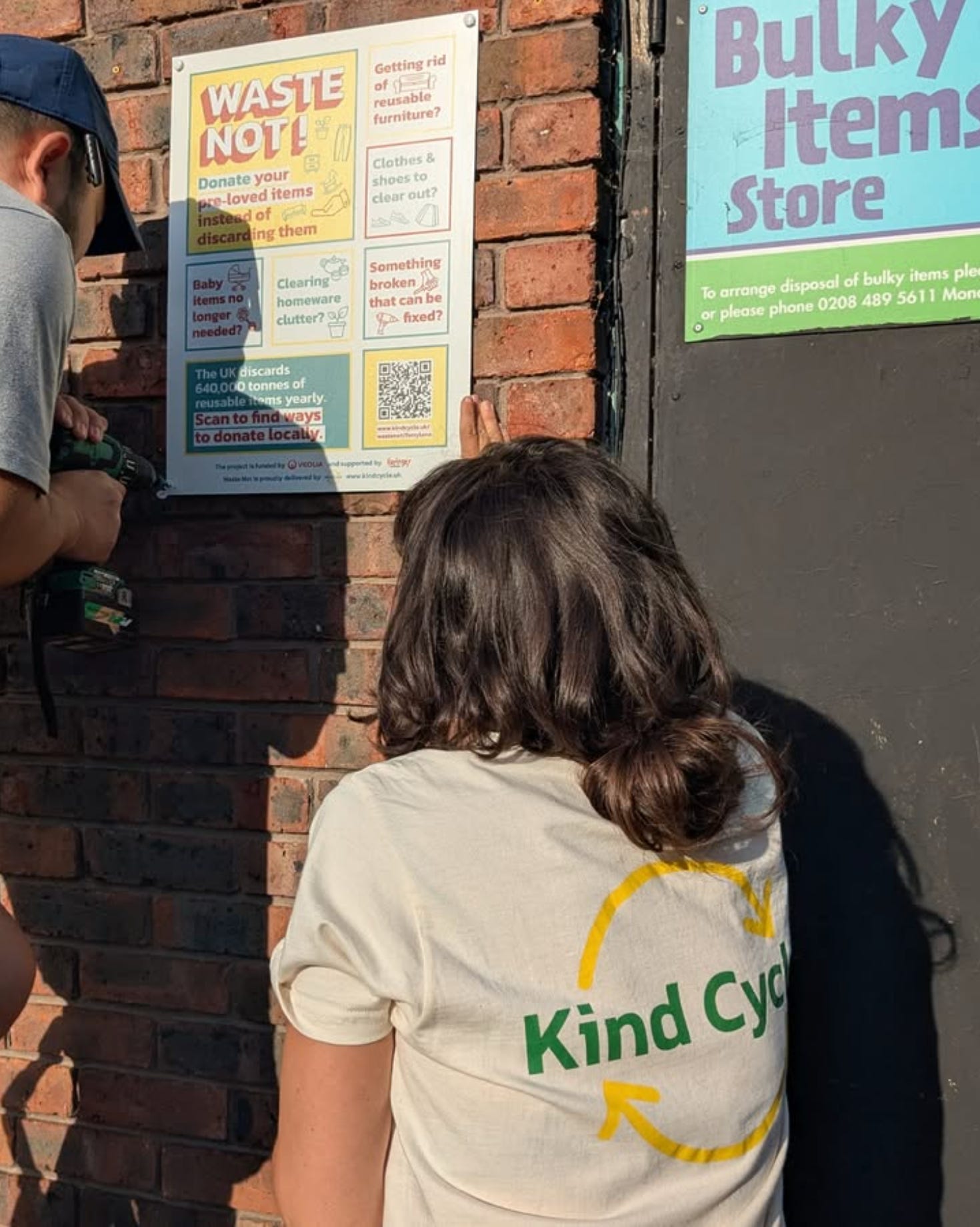
KindCycle was born out of the exact context described above. It was created on a Haringey council estate, Ferry Lane, and has now expanded into two more, including the sprawling Broadwater Farm Estate in Tottenham (it covers 18 hectares!), with another two estates in the wings. The group who started it were, just like me, upset at seeing so much reusable stuff being put out by the bins and taken off to be incinerated or landfilled. So they took action.
Step one They secured funding via the the Veolia Sustainability Fund; this was the first in three different pots of funding they have accessed.
Step two They researched all the local charities and organisations where reusable items could be donated, with particular attention on the ones that do doorstep collections and put all these on a dedicated website.
Step three The group created signage for bulky waste sites, with a QR code that takes people to the relevant section of a website they built (translated into the seven most locally spoken languages). Among other useful information, it provides details of all the organisations that’ll come and pick up your unwanted but still useable furniture/ clothes/ cookware etc. FOR FREE.
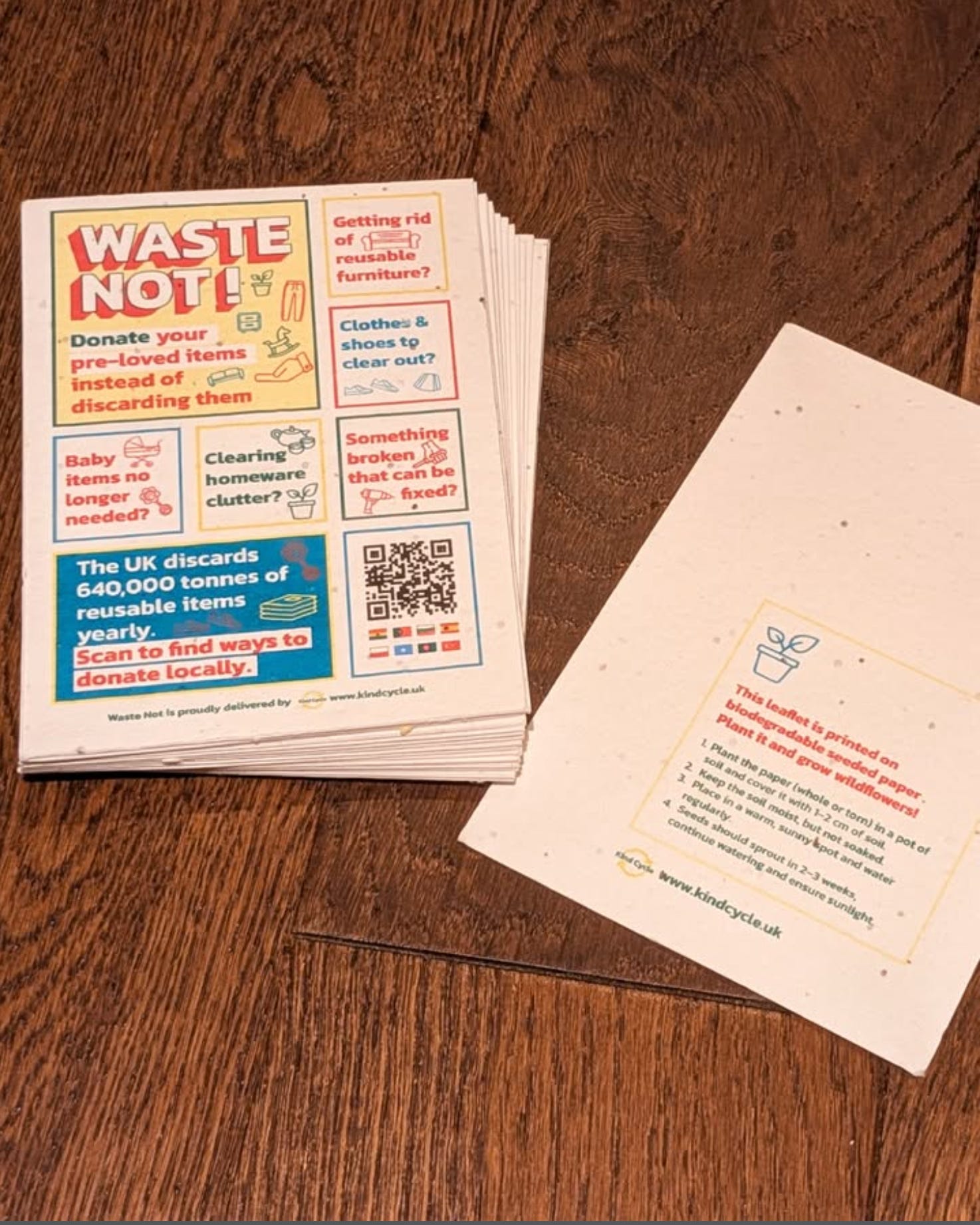
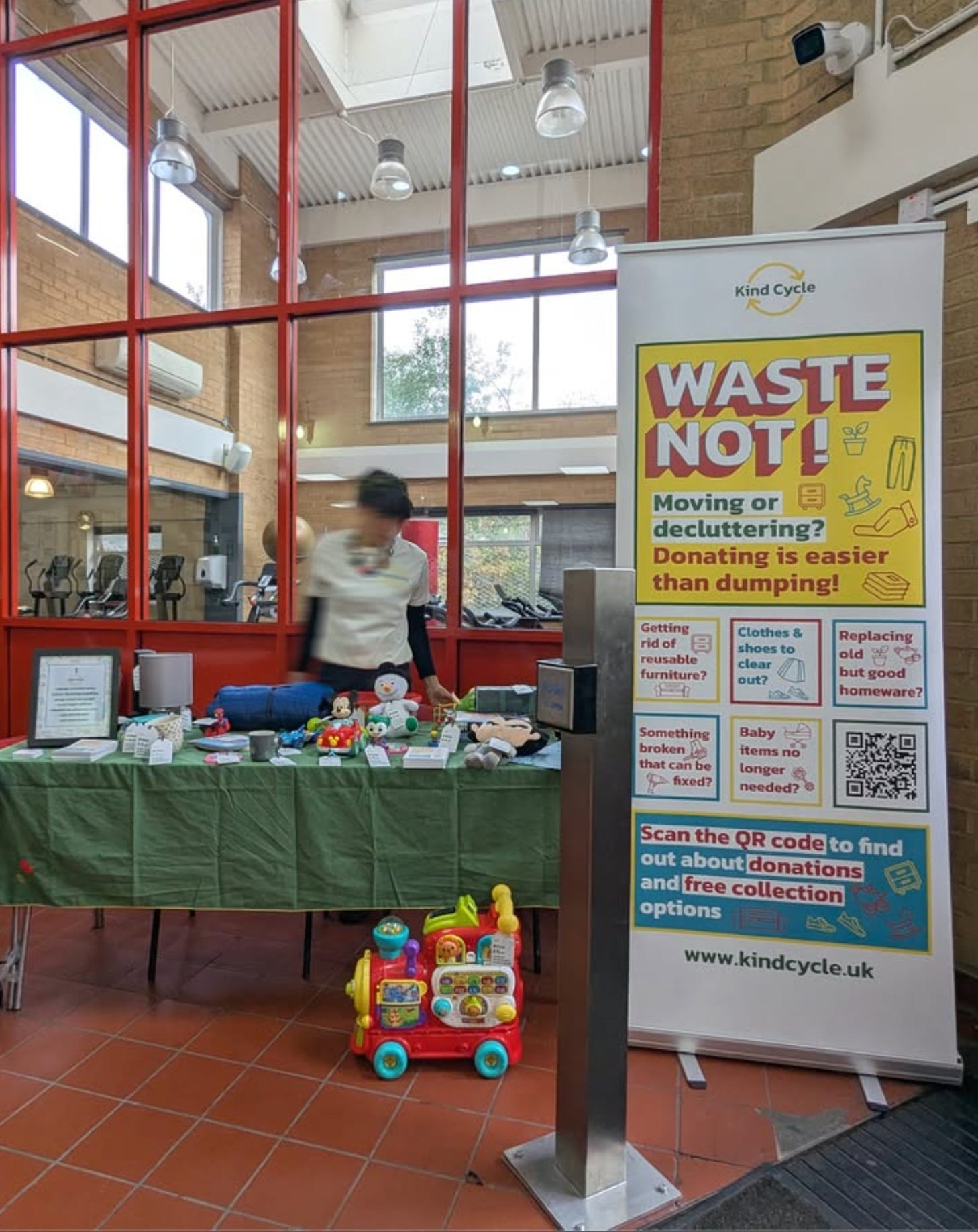
More signage and leaflets (made from seeded paper) were created to display at a community event.
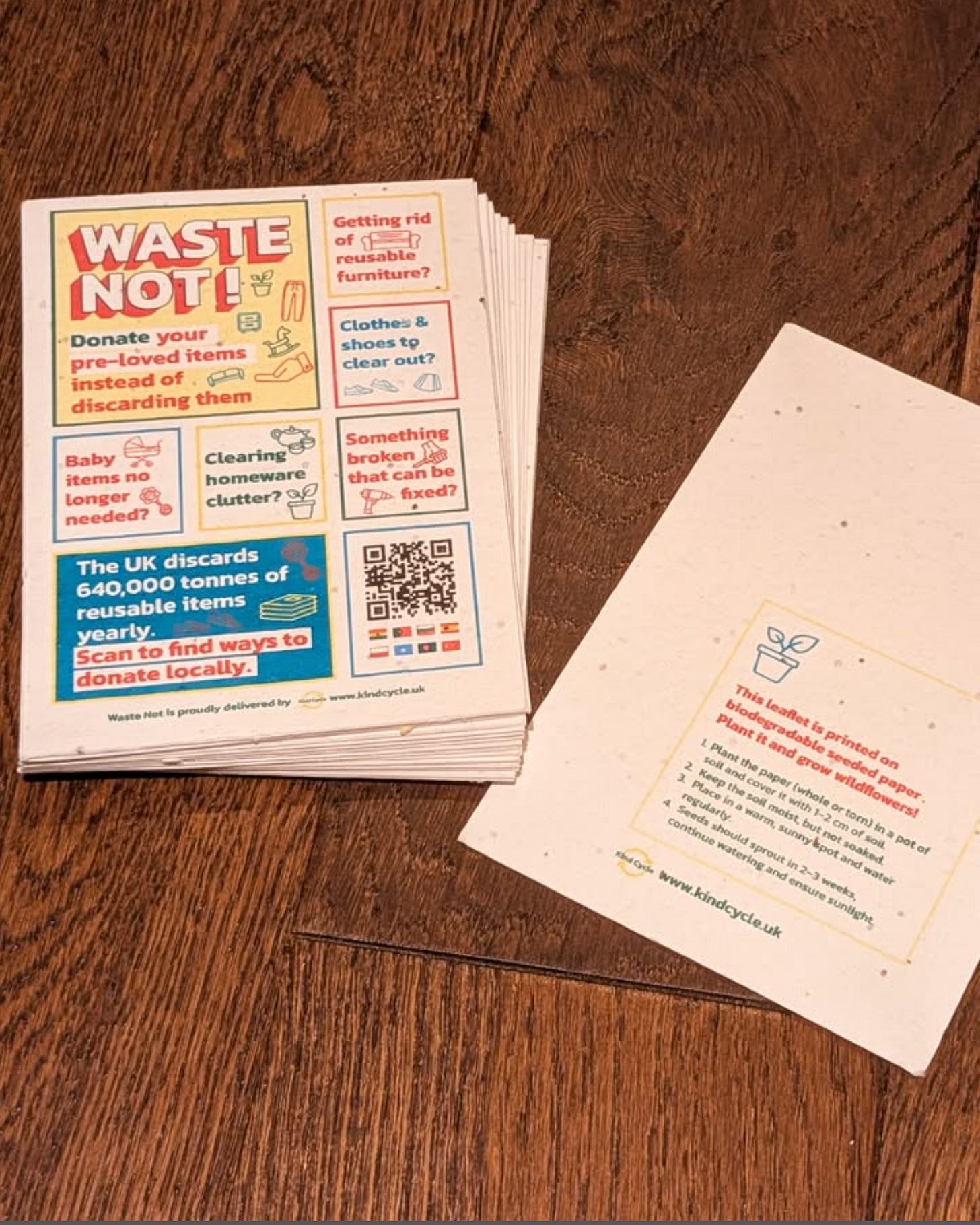
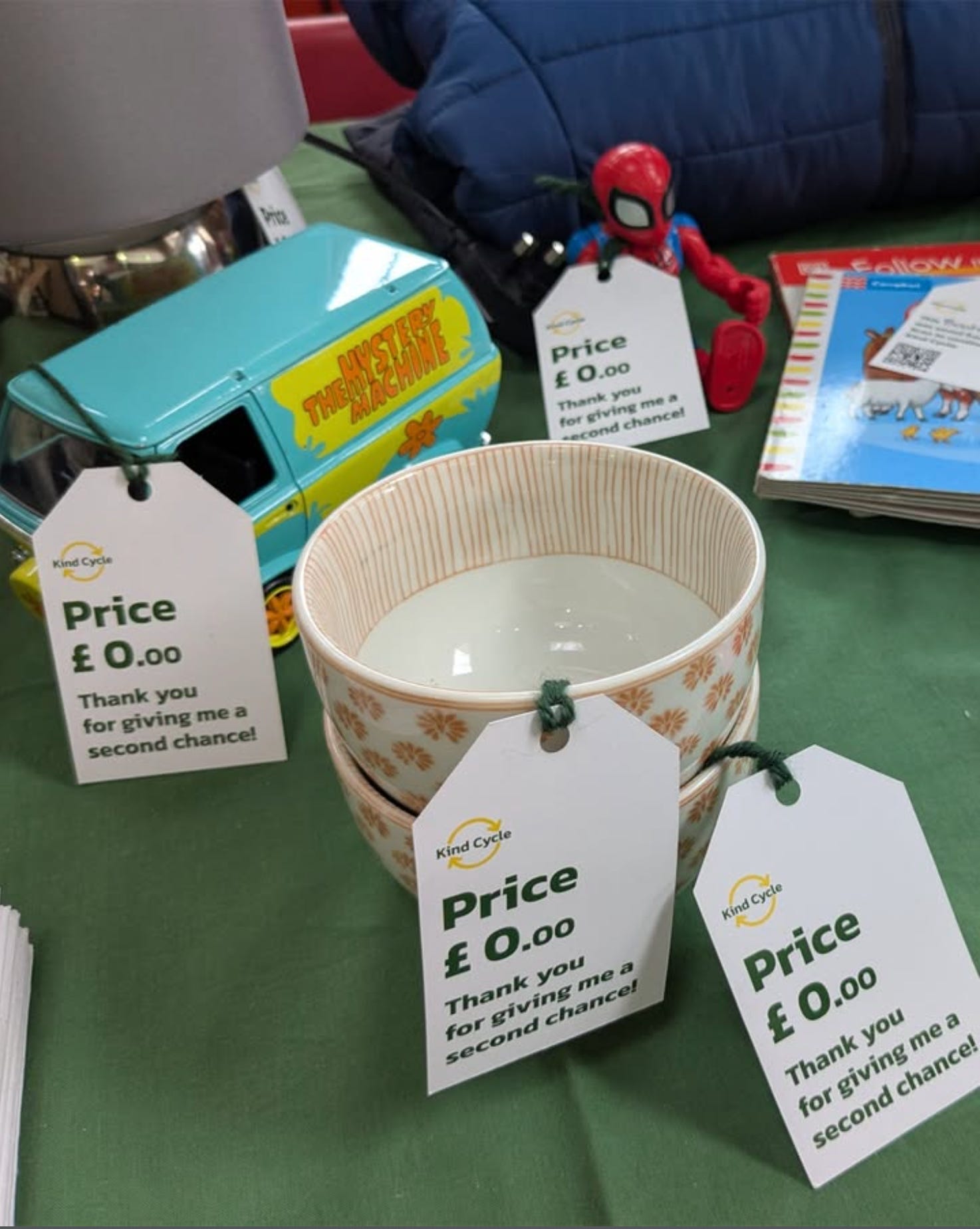
Photo: Kindcycle on Instagram @kind.cycle.uk Here they hosted a pop-up “sale”: this was, in fact, a table full of some of the most pristine items they’d found discarded locally.
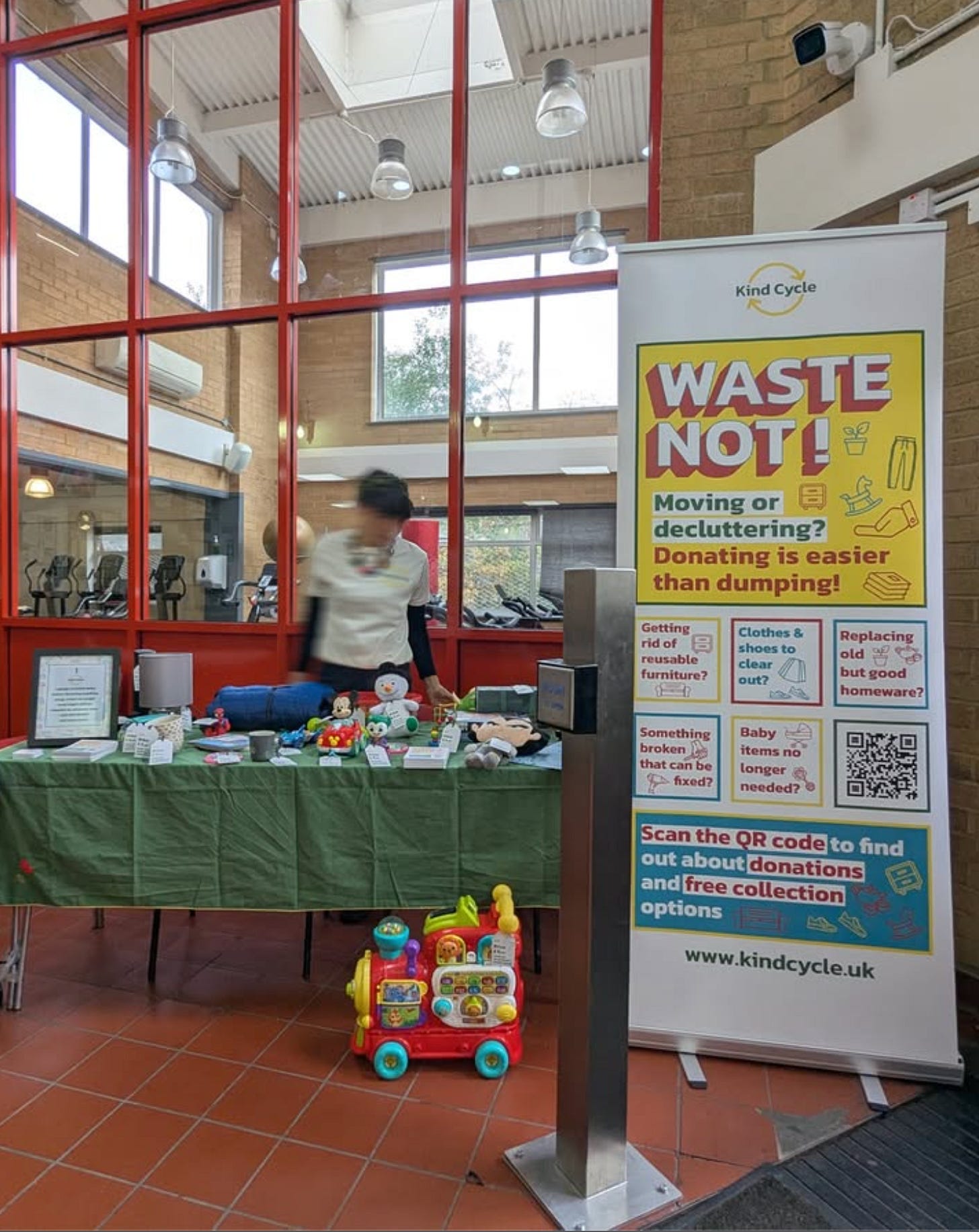
Photo: Kindcycle on Instagram @kind.cycle.uk Items were displayed with £0 price tags, sparking useful initial conversations and making new connections with fellow residents.
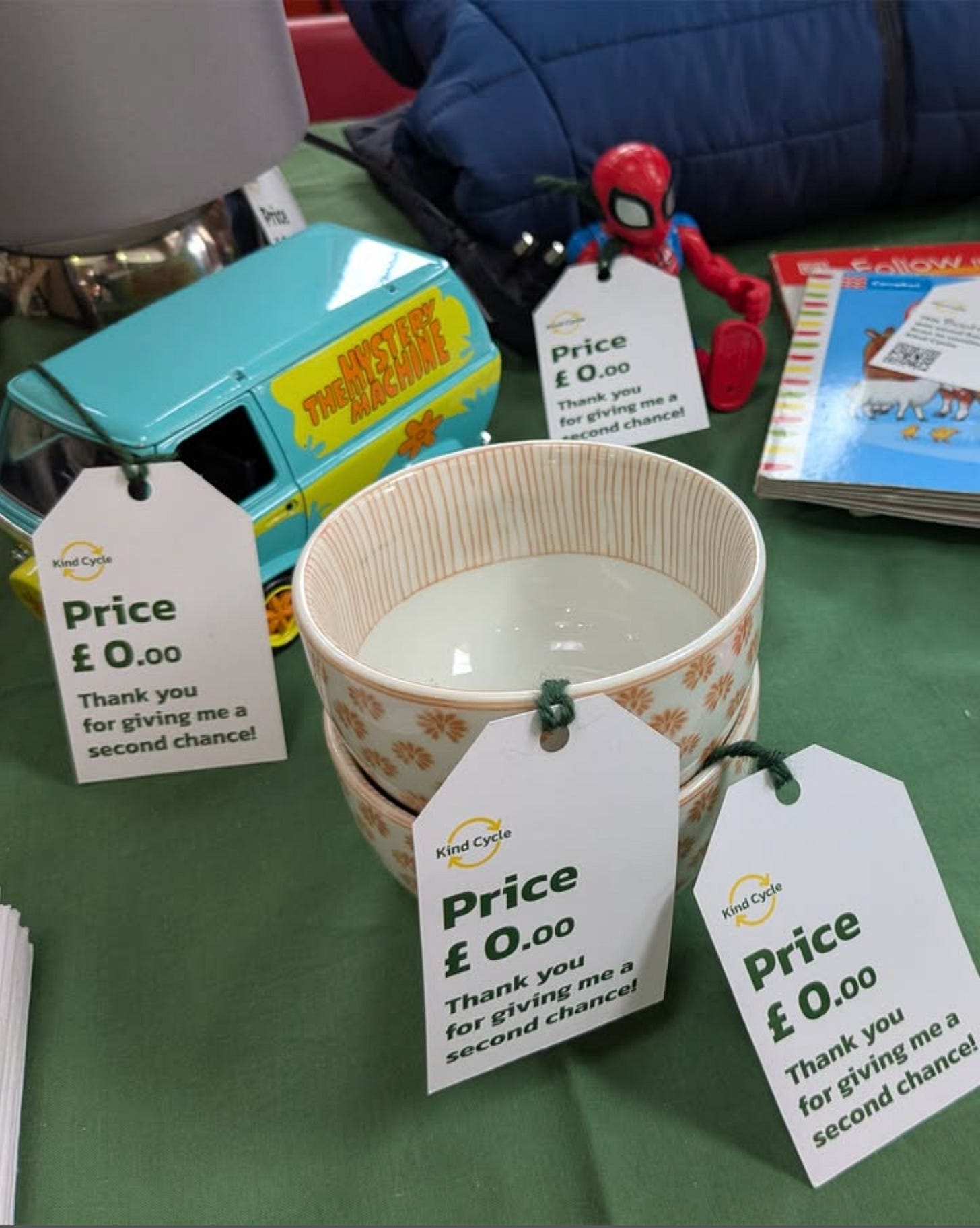
Photo: Kindcycle on Instagram @kind.cycle.uk The leaflets and signage at the event included a QR code to join a dormant-since-Covid estate WhatsApp group where residents could share details of something they wanted to offload and offer it first to neighbours. This WhatsApp, they report, has now become incredibly active, with neighbours regularly donating and exchanging items.
Interestingly but not at all surprisingly, they say they’ve found that playing down the sustainability angle they’d initially promoted, and instead promoting KindCycle as the route to FREE DECLUTTERING has broadened its appeal.
Would a Kindcycle-style intervention work on your estate? Let me know! I’m talking to them about ways to bring the idea to south London.

Making salvaged building materials SEXY
Sexy might not be how everyone would describe the opening of Tipping Point East, in the London borough of Newham, but that’s just how I roll, OK? And I think this is the most exciting reuse development happening in the UK right now and that it has the potential to be massive game-change in shifting the figures
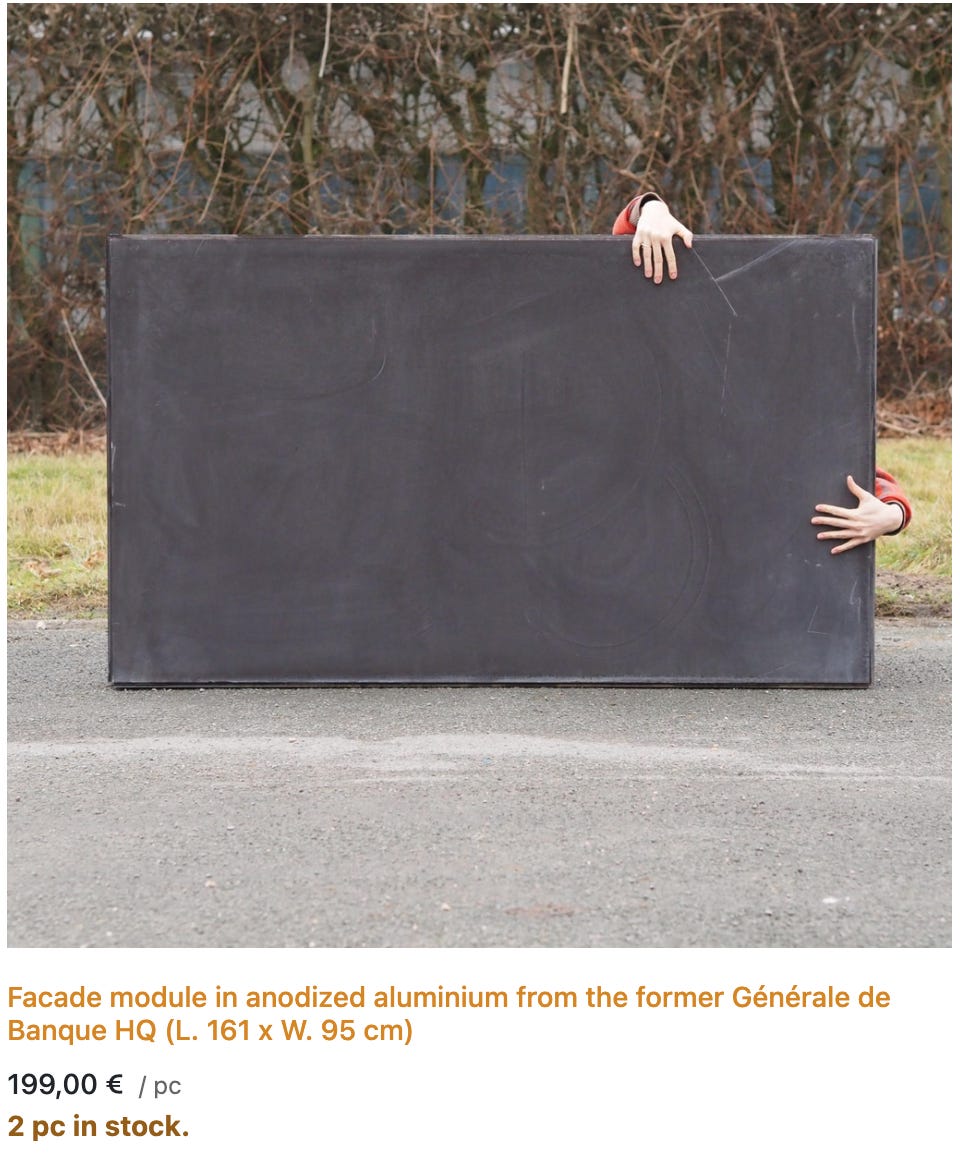
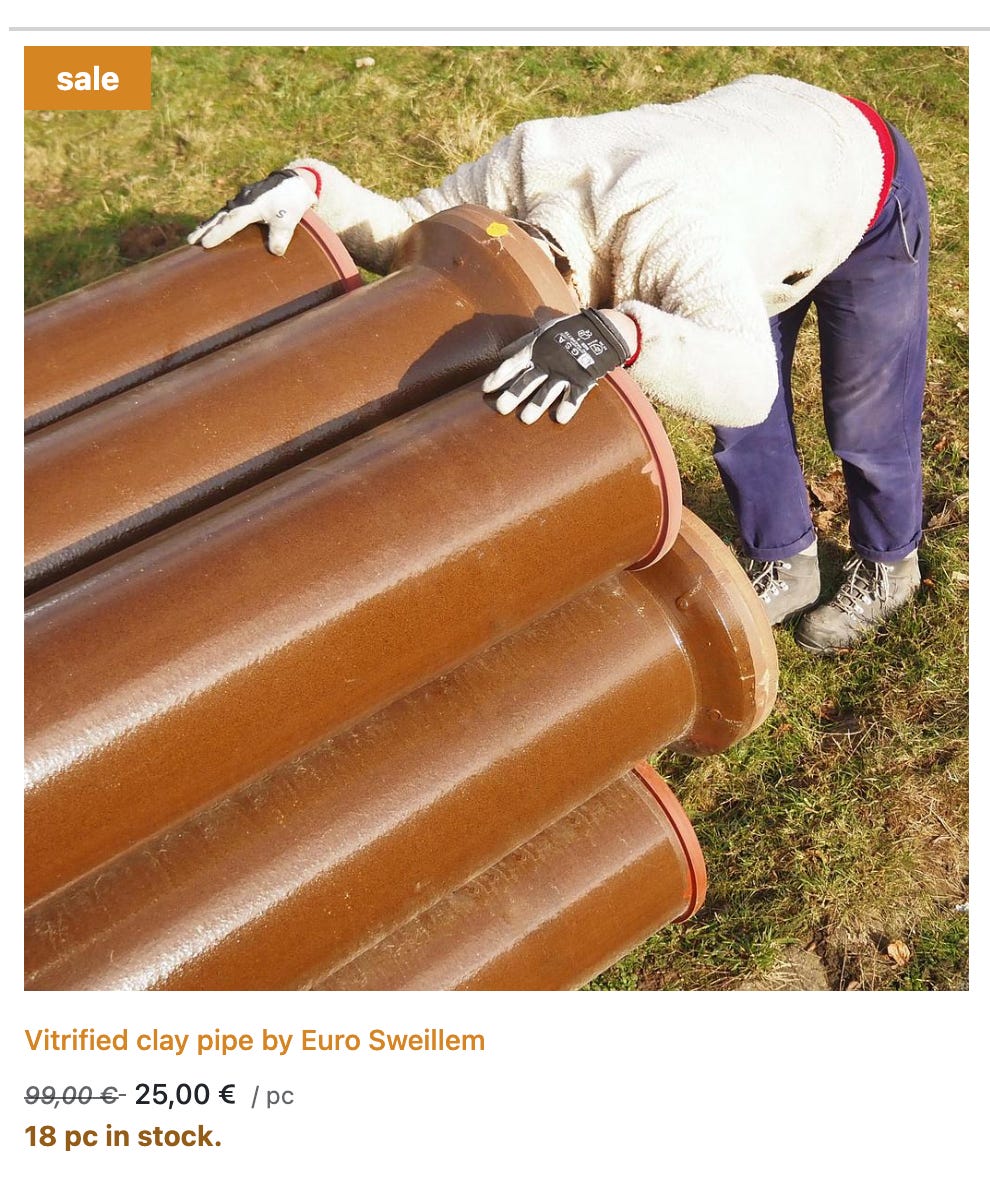
Tipping Point East is a circular construction hub - somewhere used building materials can be taken, sorted and then reused. It’s a large-scale version of a tiny circular builders’ yard in Lewes I wrote about a few years ago for Houzz and which, sadly, closed down. Much larger scale - two of its partners are Tate and the V&A, whose used exhibition materials will be diverted from landfill by Tipping Point.
At the moment the focus at Tipping Point is to repurpose materials and make them available for community-focused builds, but if it were to also grow into a hub where builders could drop items ad-hoc and also pick them up (which was the Lewes model), as well as potentially selling items salvaged from old office blocks and public buildings, like the even sexier Rotor DC in Brussels, it could be a proper game-changer. TPE is just getting started and has a huge site of which they’re still only using a fraction - I’m going for a site visit next month so shall keep you posted.
Renew Hub, Manchester and the NLWA Reuse Shops, north London

These have both been around for a few years but I only recently heard about them. Each is based around the idea that a recycling centre should do much more than recycle and incinerate: it should salvage, repair, educate and sell. The well-established NWLA reuse shop was born out of staff working at the tip pulling items out before they hit landfill. Which I absolutely love. There are now five reuse shops, full of such items, all repaired and renewed as necessary.
The Manchester Renew Hub is something else: it’s on a vast scale and not only houses a reuse retail outlet (items are sold in one of its three stand-alone Renew shops or on eBay at Renew Market) but also pods for specialist repairers and reuse experts within converted shipping containers and a space for talks, workshops, school visits, exhibitions and more. The video is well worth a watch - especially if you are working in any kind of position that might allow you to create more of these fantastic facilities.
This Substack has been going less than a year and in that time I’ve collected a vast spreadsheet of incredible organisations promoting reuse in a zillion different ways. I file them and write about as many of them as I can, in a relevant context or a round-up, like this. Share your tips here too so I can shout about them!


This is brilliant Kate 👏
This is so amazing and exciting! I'd be thrilled if we got something like any of these in our corner of SW London and am sharing the Manchester examples with my friends based there