
5 simple waste-reducing interiors wins
Plastic-free LVT alternative :: Rubble Rousers :: Toaster Tribulations :: Sustainable Designer, Ella Doran :: Reuse Consultancy

In this edition of This is Rubbish (lovely homes, less waste), you’ll get:
The incredibly exciting innovation that will turn your construction waste into a beautiful, bespoke and affordable new material
The plastic-free, low-waste alternative to Karndean and LVT flooring
Notes on toaster repairs
The brilliant hand-holding service from a favourite reuse portal that’ll make home improvement without waste way easier
And… award-winning sustainable interior designer and reuse consultant, Ella Doran on what she wishes people knew before renovating
1. What do you wish people knew before renovating?
Ella Doran, award-winning sustainability-focused interior designer and reuse consultant.

“The first thing I ask my clients before we start a renovation is: what can remain? Often it’s a case of a shift in colour palette or a reconfiguration of the space, rather than starting from scratch. Before ripping anything out, it’s worth asking whether something just needs recolouring, reupholstering, or refinishing — reuse starts before demolition, not after.”
Each month I ask waste-conscious designers, architects, builders and other professionals in the home renovation industry - as well as individuals who’ve reduced waste while doing up their own places - the one (waste-related) thing they wish people knew or asked themselves before embarking on a project.
nb. Ella was one of the designers in the sofa rescue film I wrote about a few weeks ago – it’s a real eye-opener!
2. FutuREuse from SalvoWEB
Imagine you could get expert, hands-on, personalised guidance on reusing what you have and sourcing and employing reclaimed materials when doing up your home? Wait - you CAN? Check out this off-shoot service from SalvoWEB, “the original” British-based online architectural salvage and reclaimed materials marketplace.
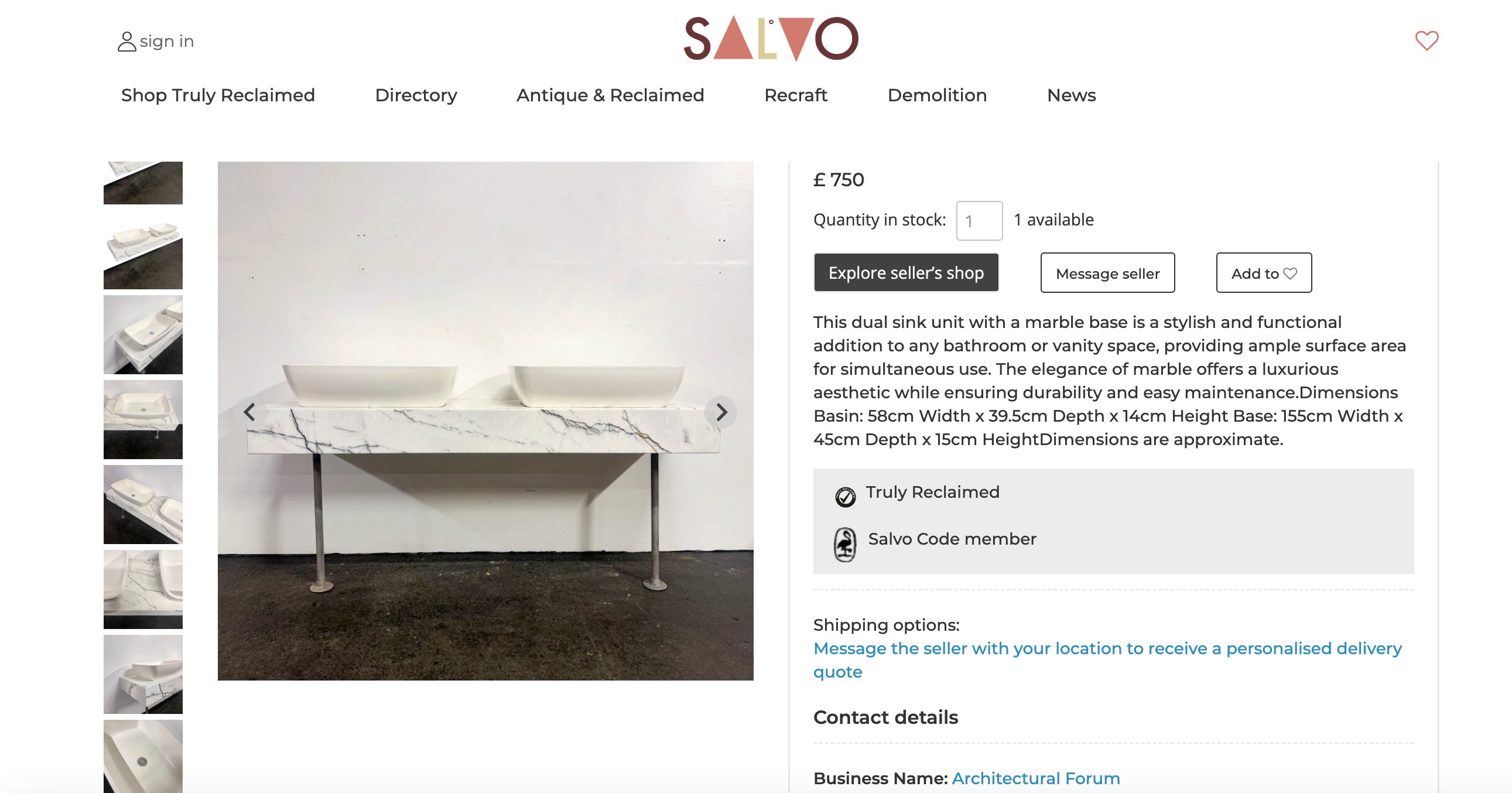
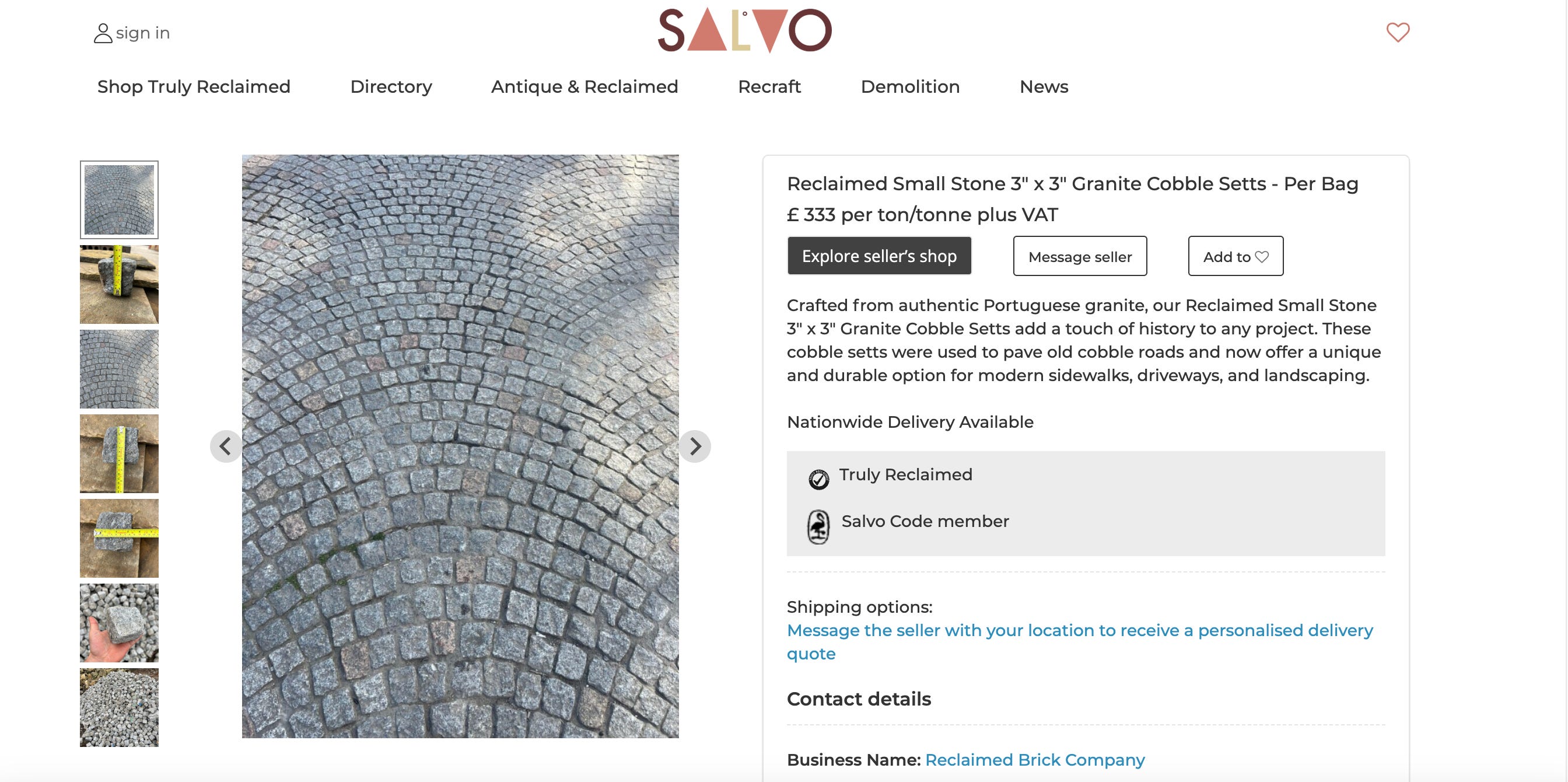
Chances are you’ve heard of SalvoWEB, which launched in 1991. If you haven’t, and you’re after anything from a two-of-a-kind bathroom basin duo, mounted onto solid marble (£750) to some granite cobble setts with history (£350 per tonne) seriously, you must check it out. (Photos of both above and below.) As well as listings, it features demolition and dismantling alerts, allowing projects to be shared before deconstruction begins, so buyers and reusers have the opportunity to rescue materials and architectural features before they’re lost.
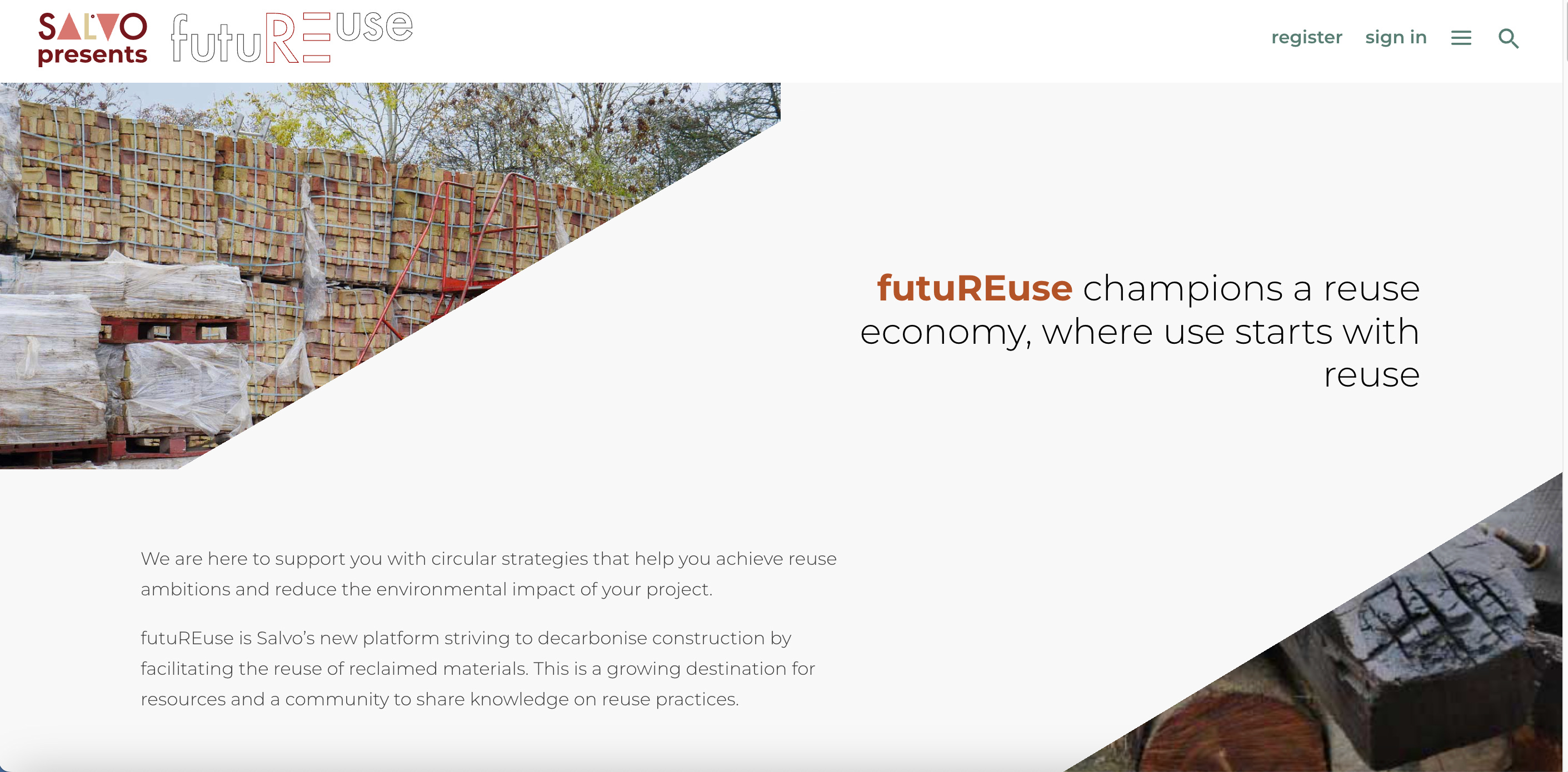
A far newer and lesser-known SalvoWEB off-shoot is FutuREuse. I’d assumed this offering, a wide-ranging reuse consultancy service, which launched in 2021, was only available for commercial projects but, this week, I got in touch with the team and learned it’s also available for small-scale private residential renovations. So if you are interested in incorporating some pre-used pieces into your renovation but have questions such as: Should we rip this out of our house? Or, will a salvaged piece look right? Or fit? (And what if it doesn’t?) Will it last? How will we make it work with the rest of our stuff? And how do we know we’re not getting ripped off? FutuREuse will hold your hand through what could feel like a daunting journey into something that might feel less safe than buying brand new. It could also save you a shedload of cash.
“We offer our reuse consultancy to help identify opportunities to retain, repurpose and circulate existing materials, reducing waste and embodied carbon wherever possible,” a SalvoWEB/FutuREuse spokesperson says. “We also offer support sourcing reclaimed materials for projects.”
Cost is difficult to estimate as the service is bespoke: “We'd typically start with an initial conversation to understand the project and what the client is looking to achieve. From there, we can advise on the most appropriate level of support, whether that's identifying opportunities to reuse existing materials, sourcing reclaimed materials, or developing a wider reuse strategy. We can work remotely where appropriate, although site visits are often beneficial depending on the nature of the project.”
Why reduce? Construction accounts for a third of all waste globally. This is directly connected to the reason our summers are now so hot because: landfill releases greenhouse gases; manufacturing from raw materials releases greenhouse gases; incineration releases greenhouse gases. But I know doing different can be HARD. This is Rubbish will make it easier.
3. Turn your construction waste into worktops (or tabletops, tiles and more)
Hold me down because, SERIOUSLY, I think this might be the most exciting waste/interiors-related innovation, EVER.
OK, so imagine if you could pay a realistic price to have any inert waste (think bricks, tiles, metal, glass) resulting from your renovation turned into a beautiful new material, totally personal to you? Well, if this is news to you, you heard it here first: YOU CAN. (Or, at least, you can if you live in the UK and can get a car-load of rubble to Leeds…but stay with me.)
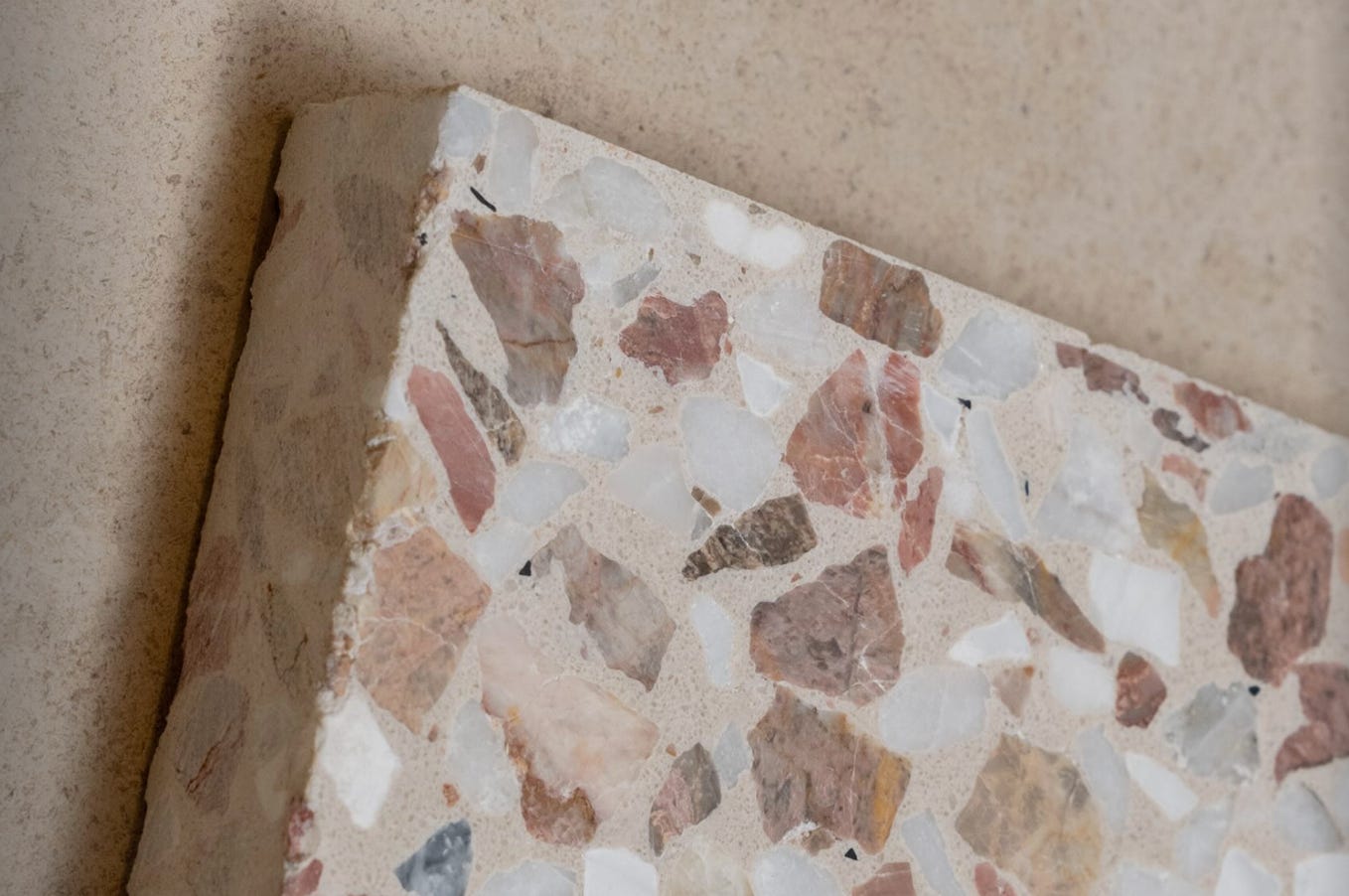
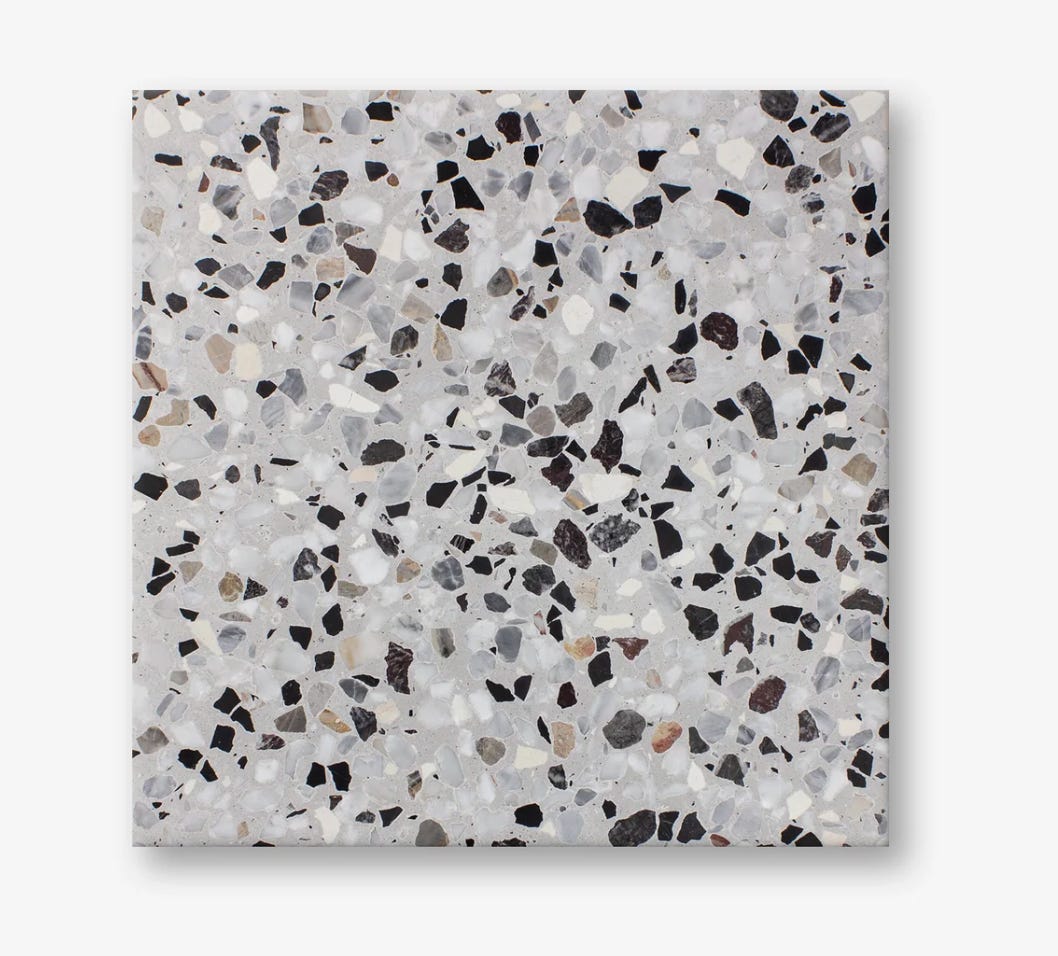
That’s right: your old bathroom tiles, taps, defunct keys, broken tools, old screws, hinges or nails, stray marbles and more can be crushed and transformed into unique terrazzo for around £200 per square metre; comparable or much cheaper than a quartz worktop. Solus Ceramics, an architectural tiling company, is making this possible with a product called Spolia (it’s Latin for ‘spoils’). I’m always on about the importance of stories in our homes and the many reasons – sustainable, historical, financial, emotional and more – we need them there. And this is a pretty special way to make stories part of the literal fabric of your home.
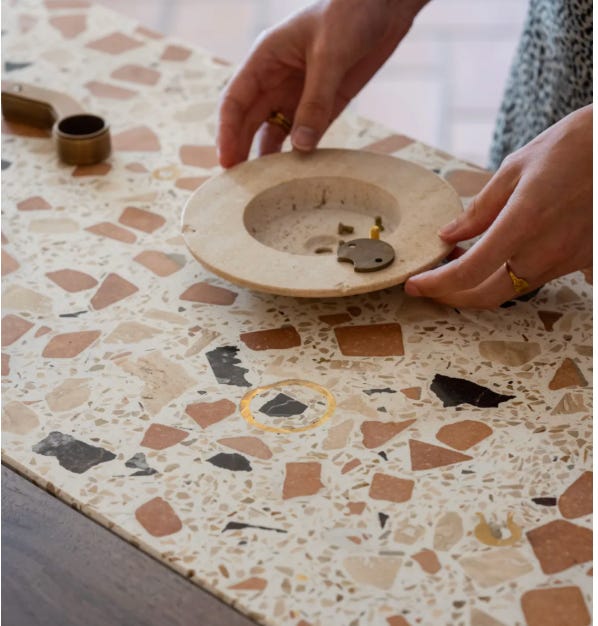
I chatted to Luke Bajic at Solus, who first saw Spolia at the Material Matters trade show in London while working as a sustainability consultant two years ago. He was so excited he joined the company and has been working ever since to develop the material further. The idea for Spolia initially came from the circular refurbishment of what had been JP Morgan’s 1980s-built HQ in the city of London. It is now a new office complex called Finsbury Dials (there’s a link to the story behind its refurb below). The building had originally been clad in tonnes of pink granite and Solus was commissioned to come up with a way to give the material a second life, rather than it going to landfill. This resulted in the creation of Spolia, terrazzo in sheet or tile form, made entirely from construction waste.
Solus developed two strands for fabricating Spolia:
Non bespoke: in which large quantities of construction waste are used to make a minimum of 50 per sqm of tiles, using a tile press (in the country’s oldest terrazzo factory, established in Manchester in 1935). This comes in a range of set colours. “[It] incorporates diverse upcycled aggregates sourced from demolition sites across the UK, transforming discarded materials into stunning, durable, and low-carbon surfacing solutions.” Lovely… but 50sqm of tiling is an unrealistic minimum order for the average house.
Bespoke: so this is where it gets sexier and potentially relevant to the likes of you and me. Solus also makes bespoke fabricated Spolia and, for this, there is no minimum order as it’s pressed by hand and made from your own construction waste. While prices can vary depending on thickness, finish and transport (more on that in a sec), Bajic told me the material itself, including crushing, costs £200 per sqm. This gets made in Leeds so the, admittedly, not insignificant catch is that you need to get your waste transported there. “Bag it up and drive it there yourself if you like,” he said when I asked if you’d need to get a skip sent to the factory or how much collection would set you back.
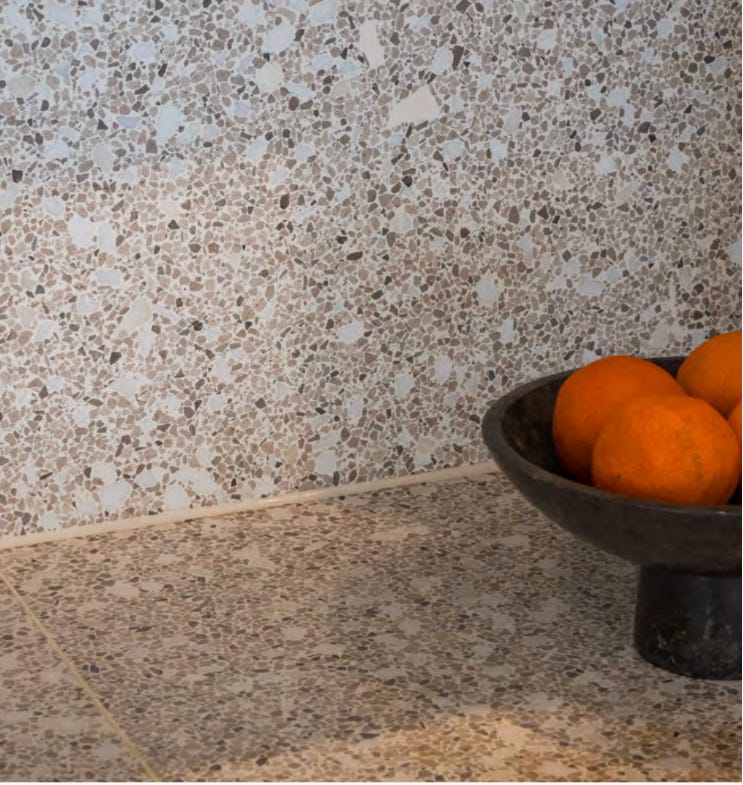
You also need to get the waste sorted – best done by your contractor as they go along. “It’s just a matter of keeping all inert waste separate,” Bajic says. Next you’ll need to get a sample of it to Solus, which can be done by post. “We only need enough to make a sample tile,” he explains. Bearing in mind it will make up 30-40% of the tile – the rest is cement (15-20%) and UK-sourced limestone (20%).
While I’ve learned to resist demolition if other solutions might provide what’s needed, not to mention save money and carbon emissions, sometimes it will still be the best option.
Take our very scrubby old wet room, a weeny space carved out of our bedroom and lined with deeply impractical mosaic tiling (lovely colour – pistachio green – but too much grout underfoot is impossible to clean) and a layout that pisses me off at least twice a day because you basically have to walk under the shower to get to the loo, which is within splashing distance of the shower. There is also no privacy as the whole room is separated from the bedroom by only a glass shower door, meaning you have to cough loudly when approaching the bedroom and only enter when no one shouts “Go away!”. (Doesn’t apply to my children, who find it hilarious to press their faces up against the door when I’m in the shower, going, “Mummy I can see your BOOBIES!”
Also the basin is so badly shaped and tiny that you can’t use it without getting water on your feet. The shower valve is limescaled and drippy. And if you have a shower then need a pee, make sure you haven’t already put socks on because they’ll get soggy en route. You get the picture: I HATE it. However, although I have reimagined the room in my head, by extending it a bit, moving sanitaryware about and creating privacy, even if we had the cash to re-do it I’d be reluctant because of the waste, even factoring in retention of the loo and shower door (which will be fine when it’s not THE door). But now I’m fixating on retiling this dreamy new room with large bespoke terrazzo tiles, made out of everything I want to get rid of.
Porcelain tiles, like our pistachio mosaics, don’t typically transfer well to terrazzo as the glaze gets polished off in the finishing process, leaving just the white base visible. But with bespoke, hand-pressed sheets, Luke Bajic explains, “you could even come and arrange the decorative parts yourself if you like, to make sure the green remains visible”. Some day all this shall come to pass. And you shall see the before and after.
(*Literally the separated inert contents of a skip)
4. LVT gets a plastic-free, low-waste competitor
This flooring swerves PVC and is, instead, made from leather rescued from landfill
When I visited Clerkenwell Design Week earlier this year, I loitered in a random showroom on my way home, mainly to avoid having to get into conversation with someone walking ahead of me who I vaguely knew. I’d reached my small-talk limit.
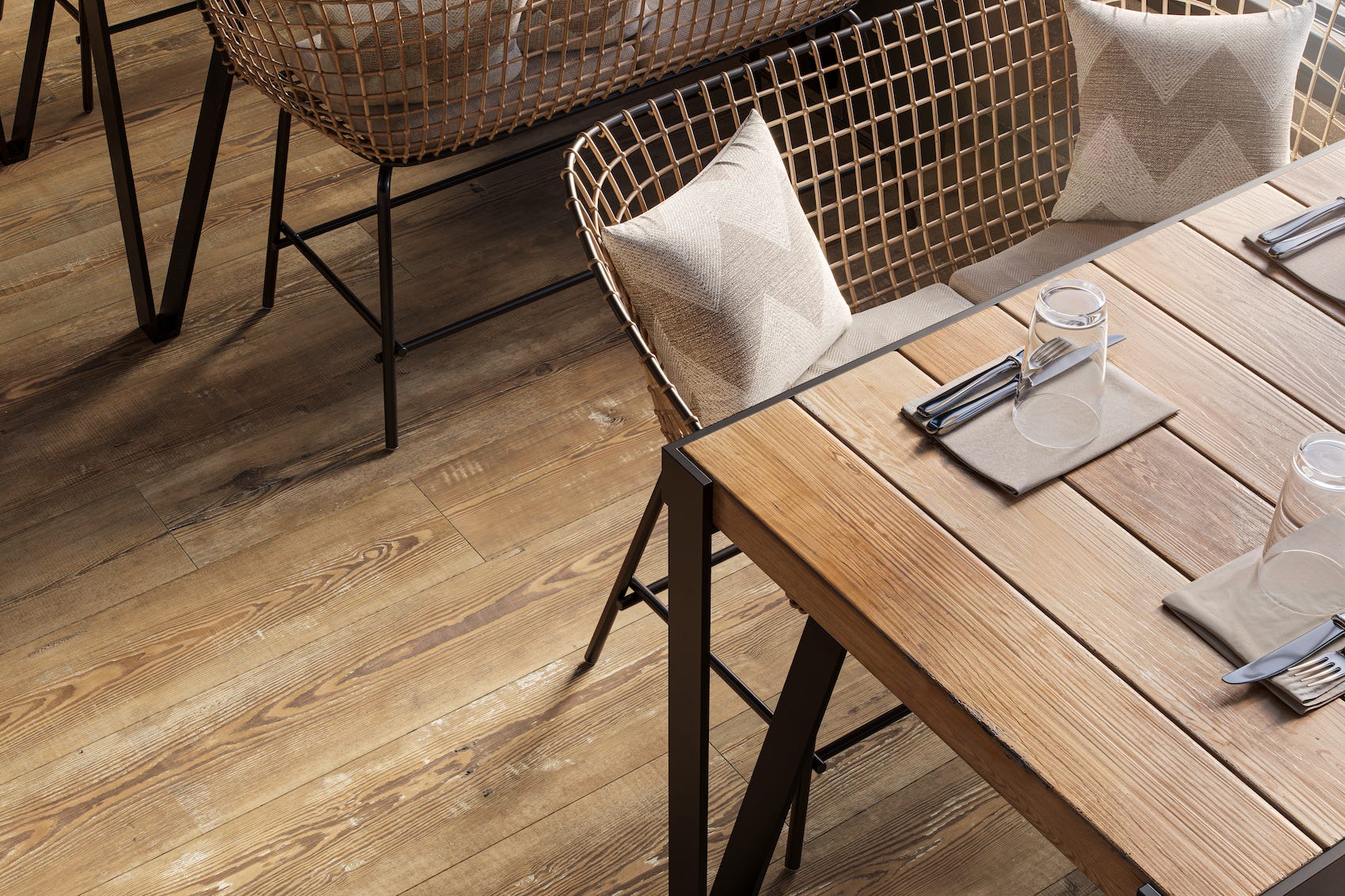
However, I was then faced with a smiling man proffering a brochure: “Do you know Karta?” he asked. That’ll teach me, I thought, but I didn’t want to be rude and so before I could say, “No - please, tell me about it,” through gritted teeth, he’d whisked me over to a display and was explaining how much waste leather the shoe industry produces and how the flooring he was showing me was rescuing this waste from landfill and turning it into a plastic-free alternative to Luxury Vinyl Flooring, or LVT (at the top end of which is the Karndean brand)? I was glad I’d been feeling anti-social.
In case you’re not familiar, LVT is made largely from “more durable than timber” / never biodegrades PVC and has a digitally printed and often textured veneer glued to the surface, designed to look like wood or stone. It’s interiors’ version of fake grass.
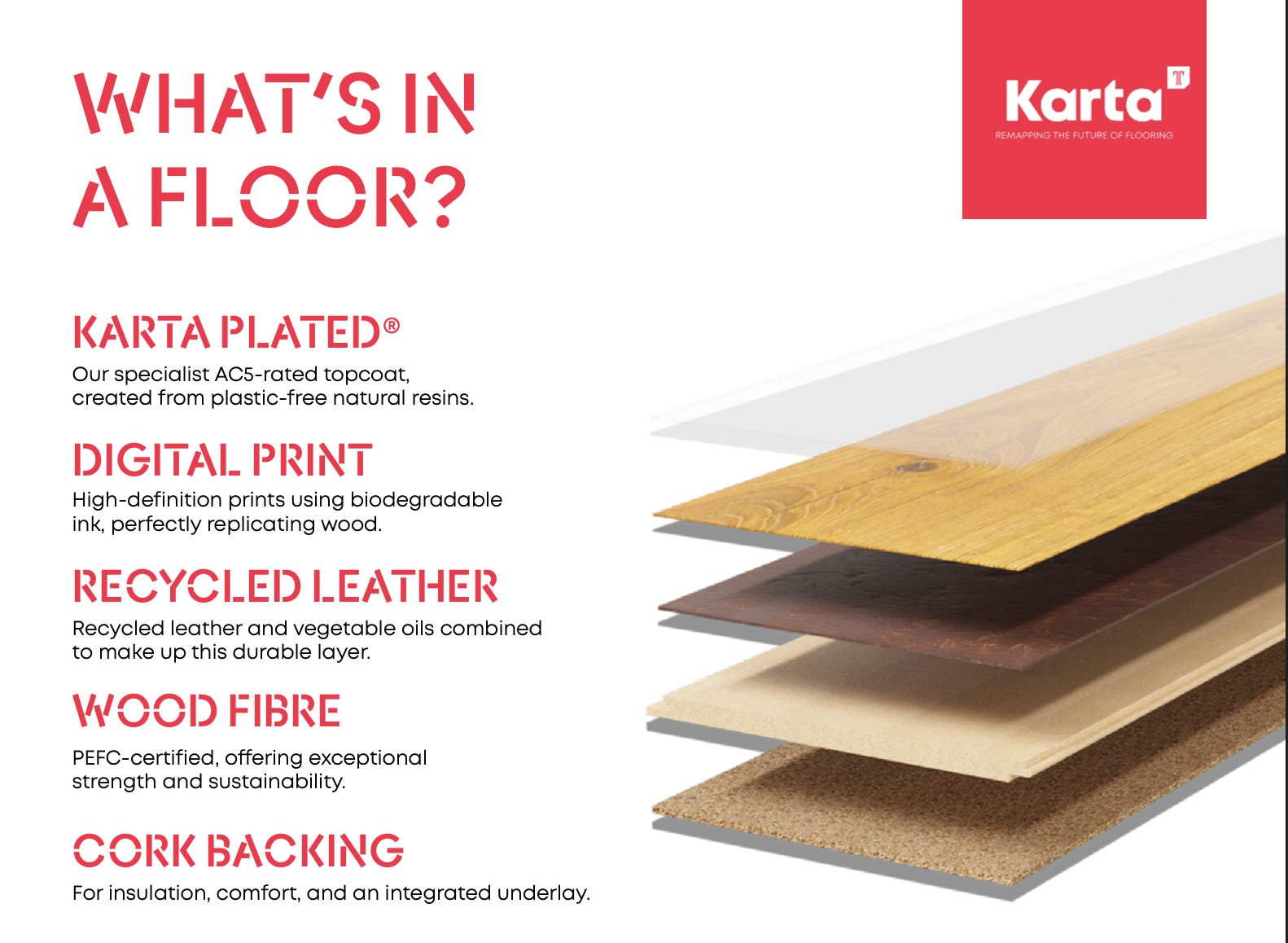
While, personally, I avoid acquiring new leather, I do favour the idea of leather that already exists not getting landfilled or incinerated. Karta bigs up the material, saying it is strong, long-lasting. sound-absorbing and water-resistant with natural thermal properties help to regulate indoor temperatures and improve energy efficiency all year round. The brand also says the flooring is 100% recyclable – even the resin used is mineral rather than plastic-based.
5. Toasters and tribulations
If you follow This is Rubbish on Instagram, you might recall my broken toaster situation.
To recap, I took our toaster, whose push handle I had, ahem, somewhat melted by placing it a little close to the hob, along to our local repair shop (not sure where yours is? Check out the amazing We Are Repairs directory, link below).
There, I learned that parts were not available for the niche brand of our appliance and so it was destined for the small electricals donation point at our local Currys. But that if we’d opted for, say, a Dualit, it could have been repaired as parts are available. The brand also takes in its own appliances for in-house repairs.
After initial resistance based on cost and heft, I finally bought a reconditioned ‘Architect’ Dualit direct from the Dualit website. It was marginally cheaper – £112 instead of £139 and came boxed, as new and with a year’s guarantee.
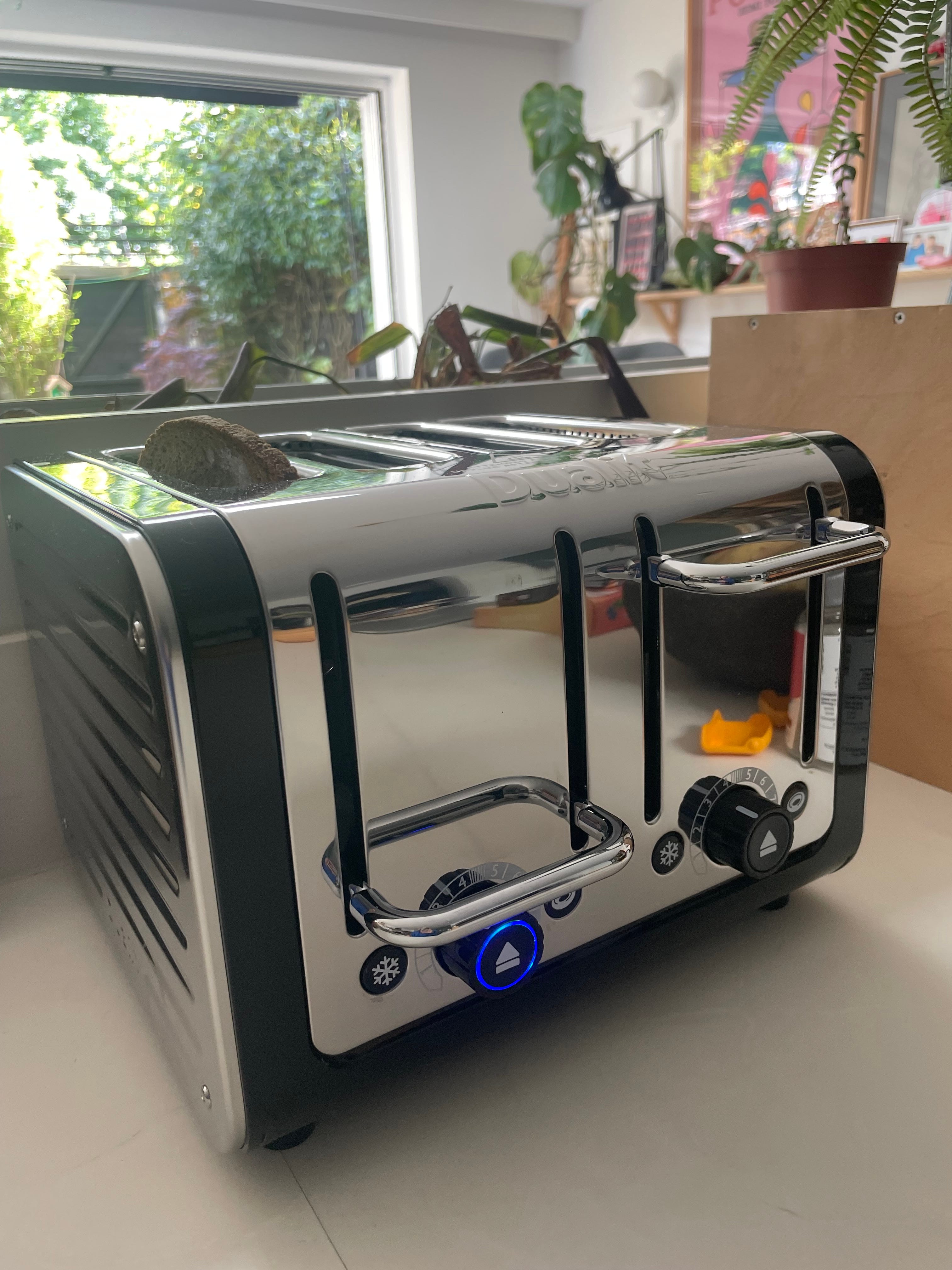
The bad news? I have since discovered that the only range Dualit don’t offer to repair in-house is… ta-da… The Architect. Reader, I cried into my Marmite.
That said, these machines are built to last and repairs may still be possible externally, as universal parts are available. Also, I make these mistakes so you don’t have to. Right? (And if it does break, I’ll let you know how that goes!)
Meanwhile, which brands of appliance have you tried to get repaired, and how did it go?
This is Rubbish is a reader-supported, 100% AI-free publication. To receive weekly ideas that’ll help you do up your home without adding to landfill and incineration, consider becoming a free or paid subscriber.
Bonus: Bookmark it
This poignant Instagram account devoted to the chairs of Beirut is utterly compelling: this bit of resourceful repair caught my eye and reminded me of the plastic trug repairs I’ve seen done with a drill and cable ties. The chair was shared to the account by Lebanese creative director and collage artist, Ghyda Helou, who explains her father repaired it “in his own way”. And if we’re talking about furniture and objects with stories, this is the epitome.
Resources:
Ella Doran; FutuREuse; SalvoWEB; The sustainable story of Finsbury Dials; A BBC; deep dive into construction waste figures; What is LVT made from, the Tile Mountain guide; Karta rescued leather flooring; We are Repairs
Spoila looks great and what a wonderful way to reuse your own waste materials.
I replaced a broken element in my Dualit toaster. Photographed it as I took it apart to follow as I put it back together. Couldn't find anyone locally to repair it for me - but now of course there's Oxford's Repair Cafe ... Hoping I don't need them.