
The question: are balloons really that bad?
It's complicated, as I found while trying to decide whether swerving them for my kids' birthdays made me a major killjoy

Find this newsletter useful, interesting, maybe even inspiring? Do click the ❤️ above, share to spread the word and tell me what you think in the comments; this will all tickle Substack’s algorithm into showing it to more people.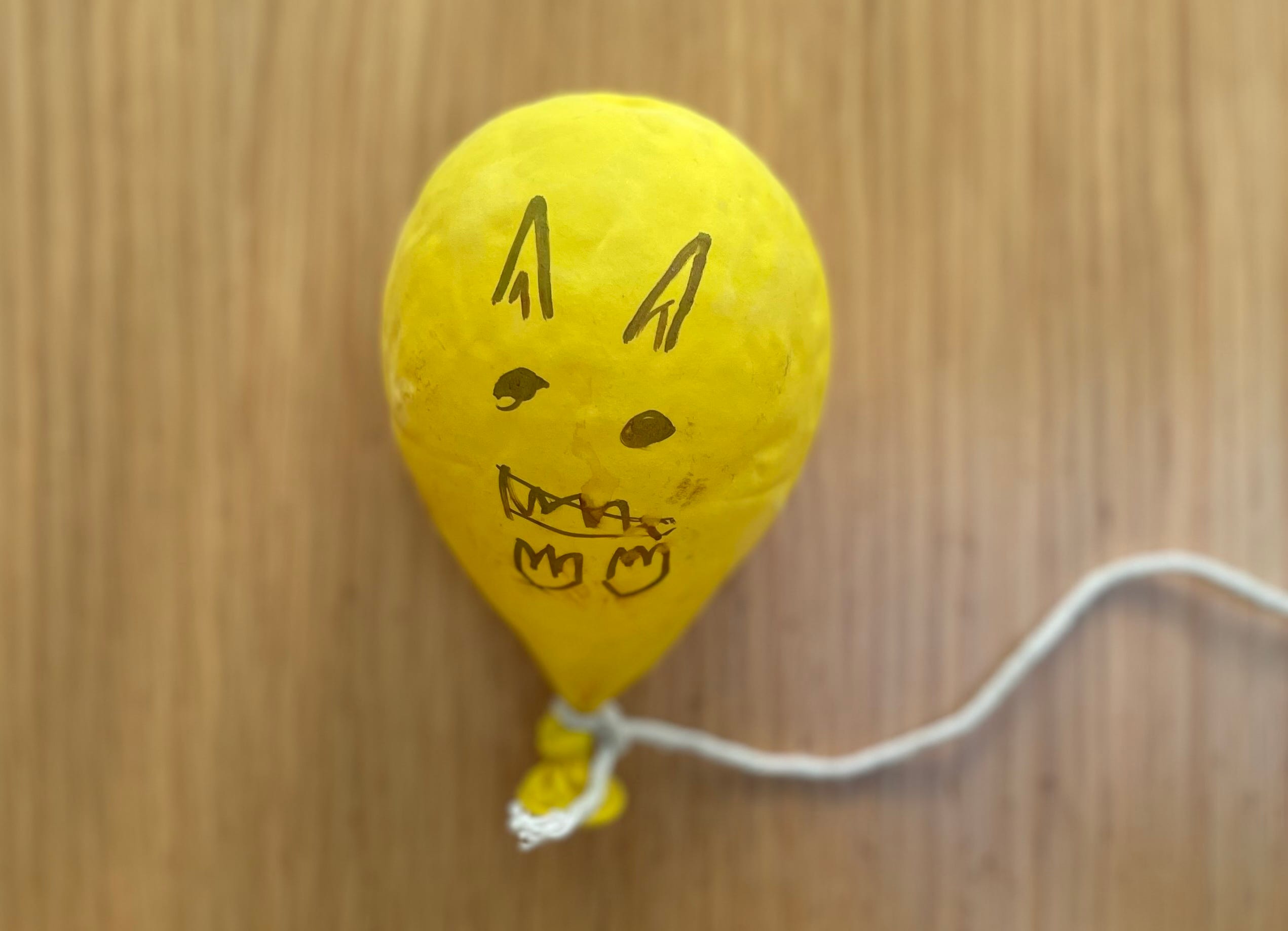
I don’t know what it is with May, June and July, but every other child we know seems to have a birthday around now. Including ours, whose joint fourth and seventh party is this weekend. And a kids’ party mainstay? Balloons! …Which have been on my mind in the run-up.
Who doesn’t love a balloon at a kids’ party? Invitingly tied to a door knocker or gatepost, tucked, uninflated, into a going-home bag, in an arch rising up behind a trestle table of sugary snacks, or floating high in the air, in the form of the classic helium-filled giant foil number, balloons add an air of celebration. They’re also instant, easy and cheap toys.
But, some years ago, I stopped to think about what happens to them once they’re shrunken and discarded behind a chair, or in pieces after being popped by a sharp edge (or a sharp younger sibling).
My instinct was that there was no way they weren’t environmentally evil. Nevertheless, I hopefully Googled: “Are balloons made of plastic?” and “eco party balloons”. To my surprise, I was inundated with sites promising biodegradable ones and “natural latex” varieties. Indeed, the Balloon and Party Professionals Association (NABAS) is clear that: “Latex balloons are made from a natural product derived from trees [which] are ‘tapped’ to release the liquid latex, so there is…no risk of deforestation.” It goes on: “As latex is a 100% natural product, it is completely biodegradable, which means it will break down into a residue that is safe for the environment.” Yippee? Time for a guilt-free balloon bonanza of a birthday party? It still didn’t feel right.
I got in touch with Lorraine Allman, founder of Party Without Plastic. “There are two issues with balloons,” she tells me. “The first is that even natural latex balloons are not, in fact, biodegradable despite being promoted as such. Natural latex is a natural product; it comes from the Hevea tree. And yes, in that pure form it’s 100% biodegradable. The problem is that we like pretty colours. We don’t like them to be brittle. So we have to add compounds and plasticisers and then it stops being a natural material. You have a celebration that lasts a few hours, but these will last for years, often ending up in wildlife, nests, the ocean. This is why we do not sell balloons.” Lorraine cites some research on the biodegradability of balloons, which you can read here.
And that’s before you factor in helium balloons and mylar (foil) designs that come as anything from cute baby dinosaur-shaped ones to the ubiquitous numbers. “These will never, never, never disappear off the earth,” Lorraine says. “It will sit there forever once disposed of.”
Helium turns any balloon into a next-level hazard. Whether these balloons are let off on purpose or accidentally escape, they can cause all sorts of issues. In 2019, Network Rail reported 619 balloon-related issues, mainly caused by them getting tangled around high-voltage overhead wires, causing delays while the electricity is switched off and the lines are made safe. More starkly still, said James Dean, chief operating officer for Network Rail’s London North Western route, at the time: “If you’re on a railway station platform with a foil balloon filled with helium on a string and it comes in contact with the overhead wires carrying 25,000 volts, that could cause huge injury or death.”
I also recently learned about the 1980s Cleveland Balloonfest disaster in the US, during which – if you’re not already familiar – the Ohio city aimed to enter the Guinness World Book of Records by releasing more than a million helium balloons into the atmosphere. It ended as badly – or perhaps much worse – than you’d imagine (you can watch a short documentary about what happened on the Atlantic).
It should be said that NABAS appear to be working hard to facilitate recycling of all types of balloons among their members and have a downloadable guide: “Pin- it ’n’ Bin-it!” as well as a partnership with Terracycle, the (vastly expensive, but that’s another newsletter topic) recycling firm that collects difficult-to-recycle items and turns them into raw materials ready to be turned into something new, though this is not relevant to small-scale domestic balloon use.
The question probably is: why buy balloons in the first place? Even if they are safely disposed of, which will often involve incineration by your local authority (more on that another day): does this justify their production? I picture the joy on both my children’s faces when they get hold of a balloon each and are entertained for ages, bouncing off each other, drawing faces, bashing each other on the head.
Is there an alternative? Yes and no. Nothing* totally natural will replicate a balloon’s squidgy, bouncy, floaty, fun-guy vibes. But my kids also get joy from going to the local waterplay, having a favourite book read to them with lots of silly voices, playing ‘get past Daddy’, a game I steer well clear of but which involves a lot of shrieking and jumping on our bed. So what if I don’t buy them balloons as well? Will life be less rich?
But in terms of decoration, Lorraine has heaps of tips: to replace a balloon arch, she suggests locally-sourced foliage woven around an arch and illuminated by LED lights. “Perfect for weddings or corporate events,” she says.
For other decorations, she likes sari bunting or organic cotton garlands, which reminds me of these lovely things used by Josie Da Bank that I wrote about a long time ago on my old interiors blog, Your Home is Lovely.
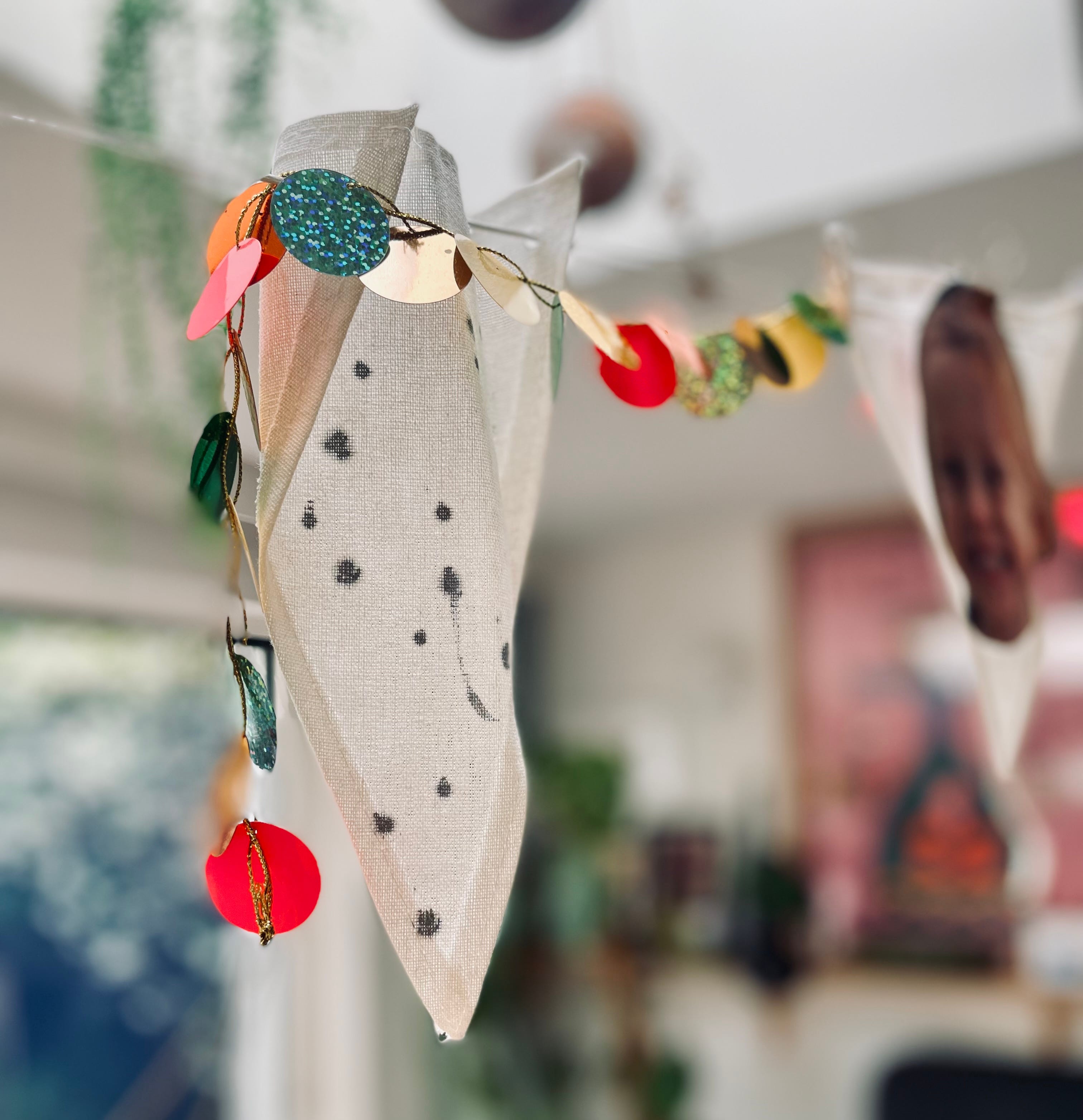
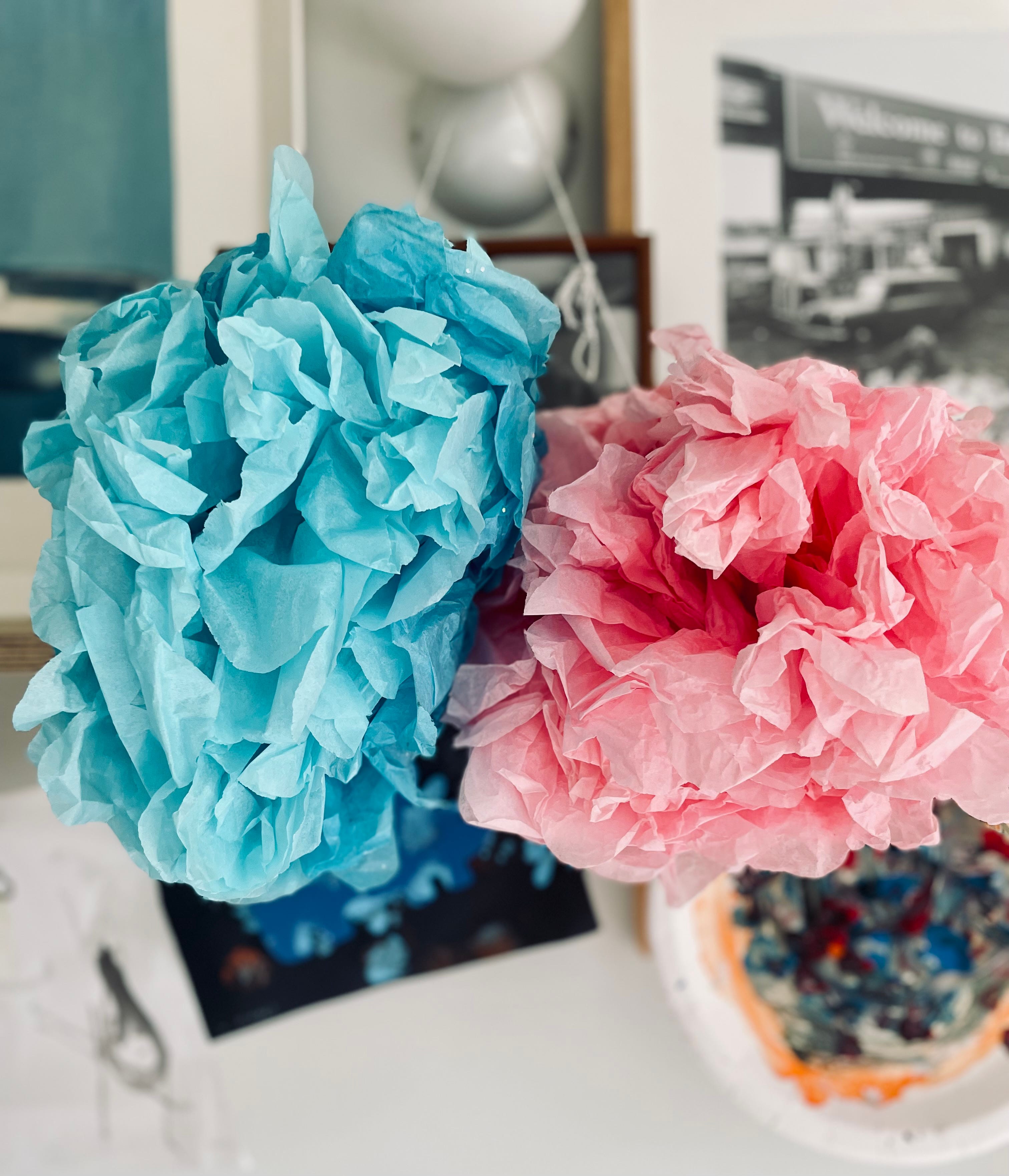
We have a whole box of reusable party decor that comes out, much like the Christmas decorations, every birthday. There’s fabric paint-it-yourself bunting, an – admittedly plastic – sparkly garland, but at least one that’s decorated at least 10 parties so far (both shown in action this week, above) and colourful paper pom-poms, two varieties, which are the visual balloon replacer (see below). Lorraine says: “There’s an argument that paper uses a lot of water, plus: deforestation, so if you do want to go down that route then ensure it’s FSC or even recycled paper.”
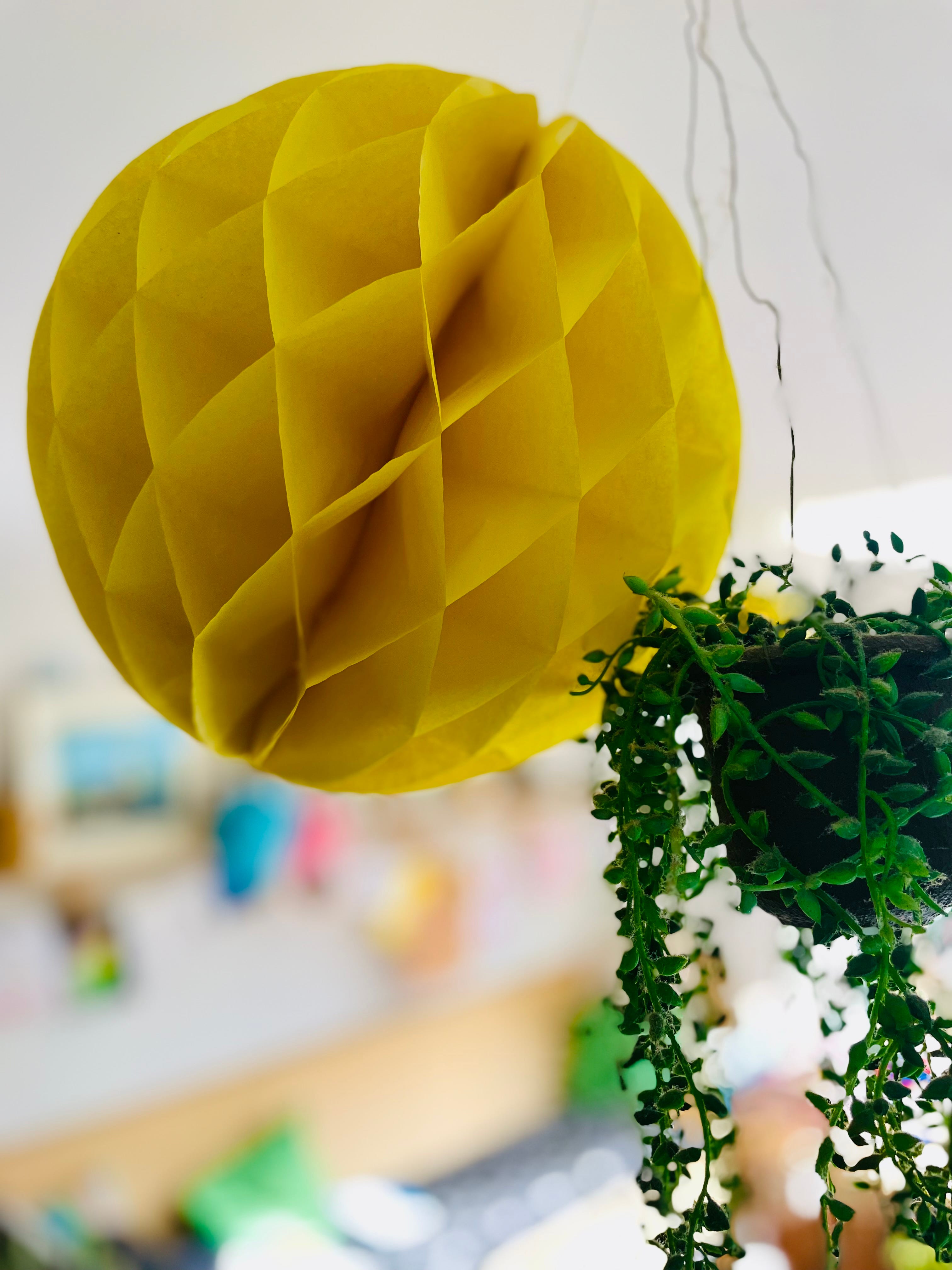
“If you really want balloons,” she continues, “you can get washi paper ones; these are fully at-home composable and come as animal characters; fish, penguins, tigers. You can blow them up, bounce them around and then scrunch up and re-use them. Kids love that they don’t pop.” (See below.)
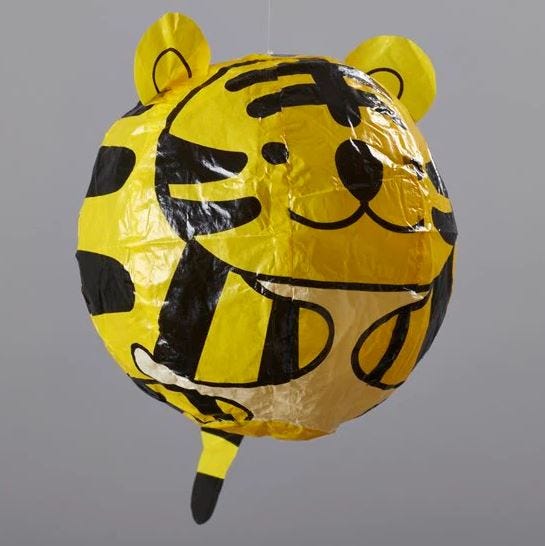
At £3.50 a-piece, they’re a LOT pricier than regular balloons, but can be reused (and would be nice in party bags, as long as there were also sweets, obviously). “And they’re not going to end up in a hedgehog’s nest or a guillemot’s tummy,” Lorraine says firmly. I know my children would be pleased about that.
*Once, during a hospital visit, a doctor inflated a latex glove and drew a face on it and gave it to the then two-year-old, who was delighted: these, I believe, come in a home-compostable format… worth a try?
Could you – or your kids – live without balloons? Tell me your thoughts in the comments bit, below.